
Safety & Insurance
Overview
Events in public space come with different safety risks–due to many people present at the same time, temporary structures and technical systems, as well as weather, fire hazards, or conflict situations. Good safety planning helps you identify risks early and plan measures (e.g. escape routes, drinking water, medical services) in a transparent and traceable way.
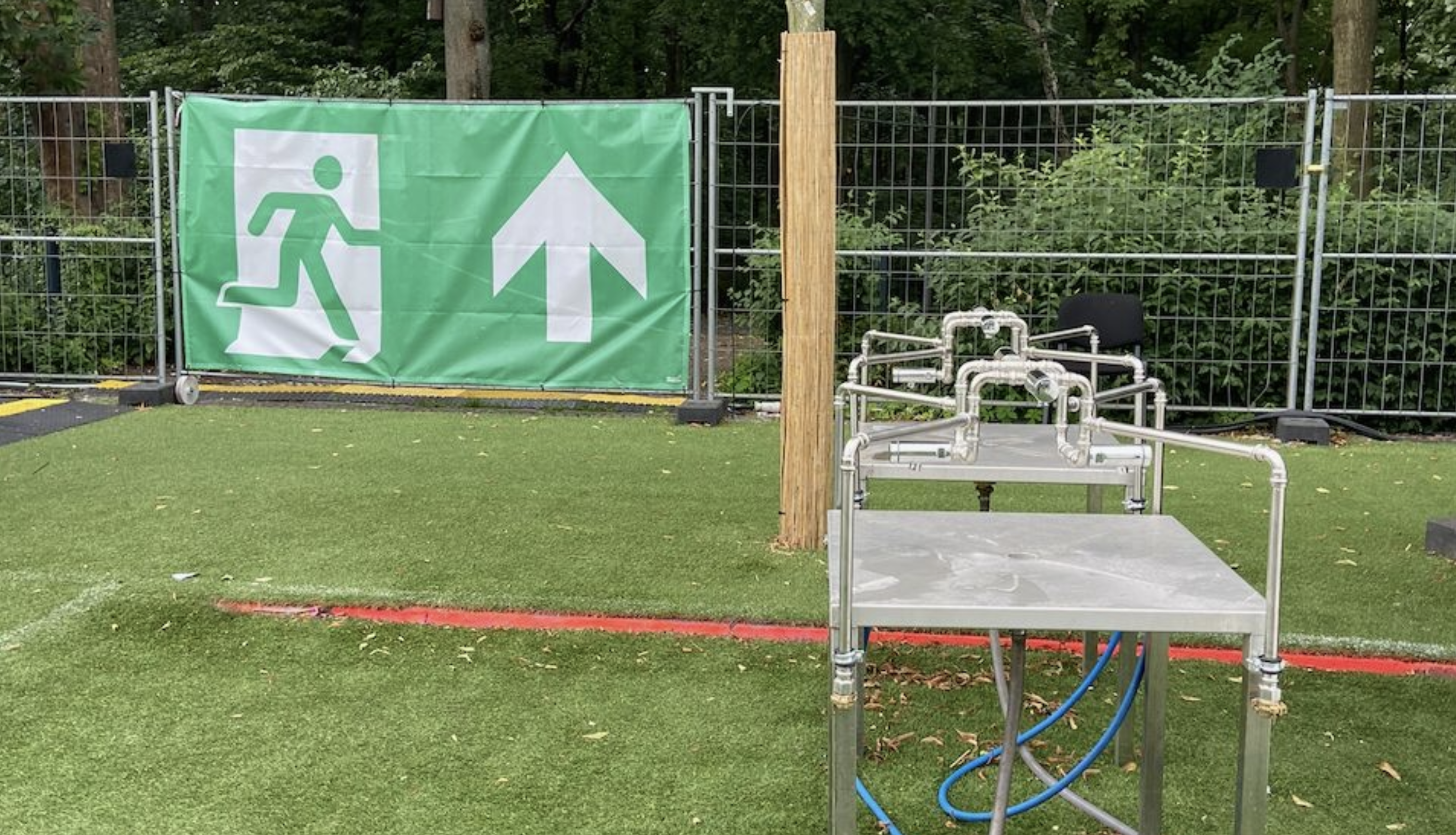
A safety concept bundles the results of your risk and measure planning–and helps you respond to follow-up questions in the permit process and for the event organizer liability insurance.
Typical risk drivers include:
- Many people in a confined space
- Temporary structures (stages, tents, grandstands)
- Technical installations (power, light, sound)
- Fire and explosion hazards (e.g. fire, gas, pyrotechnics)
- Weather events (heat, storm, heavy rain)
- Alcohol consumption or conflict situations
Specific requirements always result from the permit process. They depend, among other things, on location / area, size / duration, programme, and the assessment of the responsible District office (Bezirksamt).
Note: Depending on size and use, the assembly venue law can also become relevant. Even if your location is not formally an assembly venue, requirements (e.g. escape routes, occupancy, safety infrastructure) are often used as professional orientation in the permit process.
Safety planning
Risk assessment
Before the event, you should carry out a structured risk assessment. You can use the following steps as orientation:
- Define safety-relevant areas (e.g. entrances and exits, stage areas)
- Identify hazards and influencing factors (e.g. overcrowding, trip hazards, fire sources, extreme weather conditions, conflict situations)
- Analyse and prioritise risks (e.g. probability, severity, mitigation options)
- Define protective measures (e.g. limit visitor numbers, medical service, security staff, glass ban)
- Check effectiveness of measures (checks before, during, and after the event)
- Document results (written record and evaluation of measures)
Responsibility for safety and order lies with you as the organizer / event organizer. Tasks can be delegated contractually, but overall responsibility toward third parties remains with you.
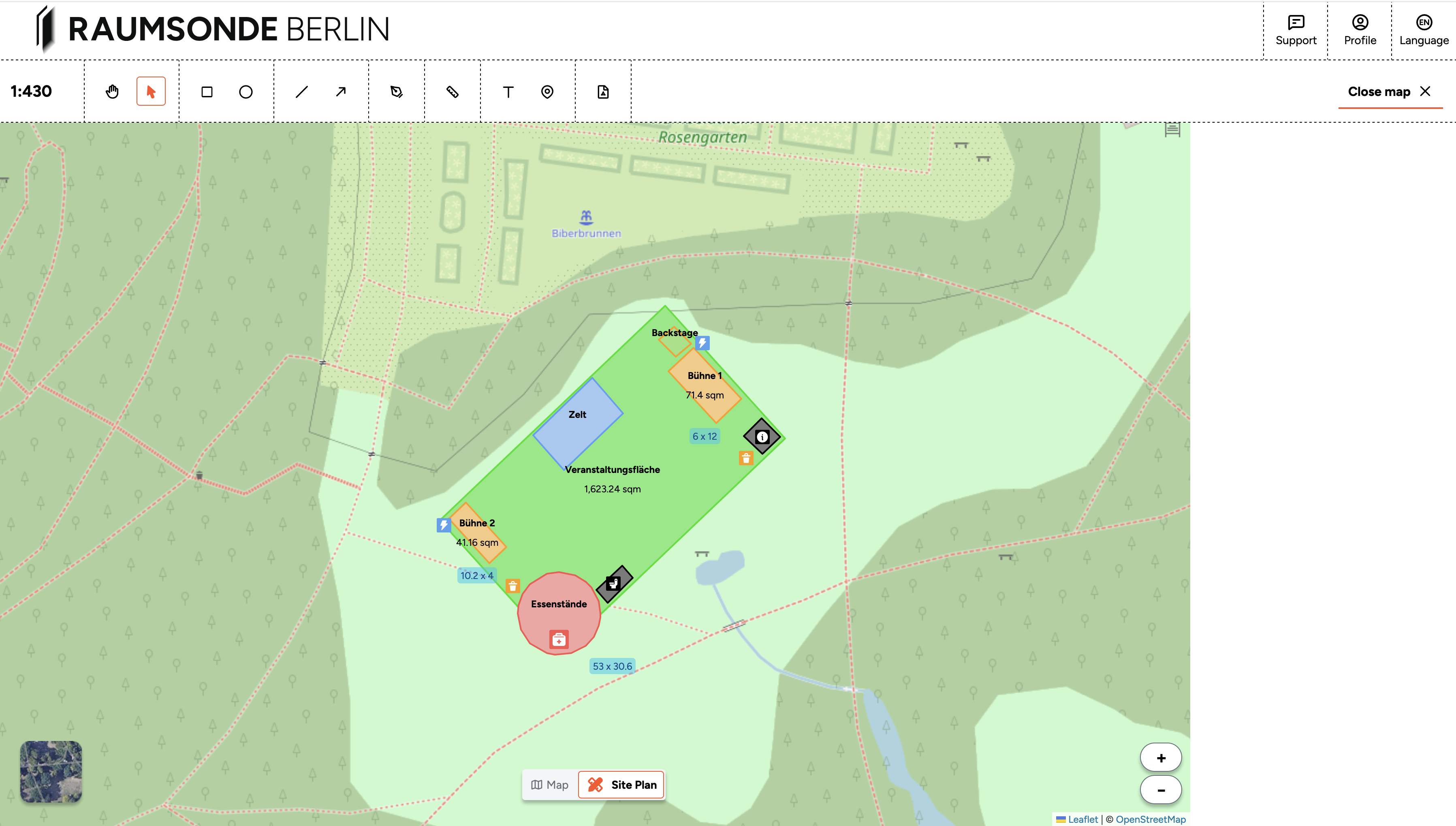
You can use the Site Plan Tool of Raumsonde to identify safety-relevant areas during the permit process, define protective measures (e.g. a first-aid tent), and document this for the permit process.
Review crowd flows
For events with many people present at the same time, managing crowd flows is central. The DIM-ICE model is a structured planning approach for crowd management (visitor flow control). It helps you systematically review relevant factors across all phases of an event.
The model distinguishes three core factors:
- Design: spatial and structural design (e.g. areas, paths, entrances and exits)
- Information: visual and acoustic communication (e.g. signage, announcements, visitor guidance)
- Management: organisation, responsibilities, staffing, workflows
These factors are considered across three phases:
- Ingress – arrival and entry
- Circulation – stay and movement on the event site
- Egress – leaving the event
The goal is to identify risks early, define measures in a structured way, and plan and test both regular processes and emergencies in a traceable manner.
Note: More detailed information on crowd management can be found in the crowd management guide by yourope.
Safety and medical concepts
Safety concept
A safety concept summarises the results of your risk assessment.
It contains, in particular:
- Description of the event and the event site
- Identified risks
- Defined protective measures
- Responsibilities
- Emergency and communication procedures
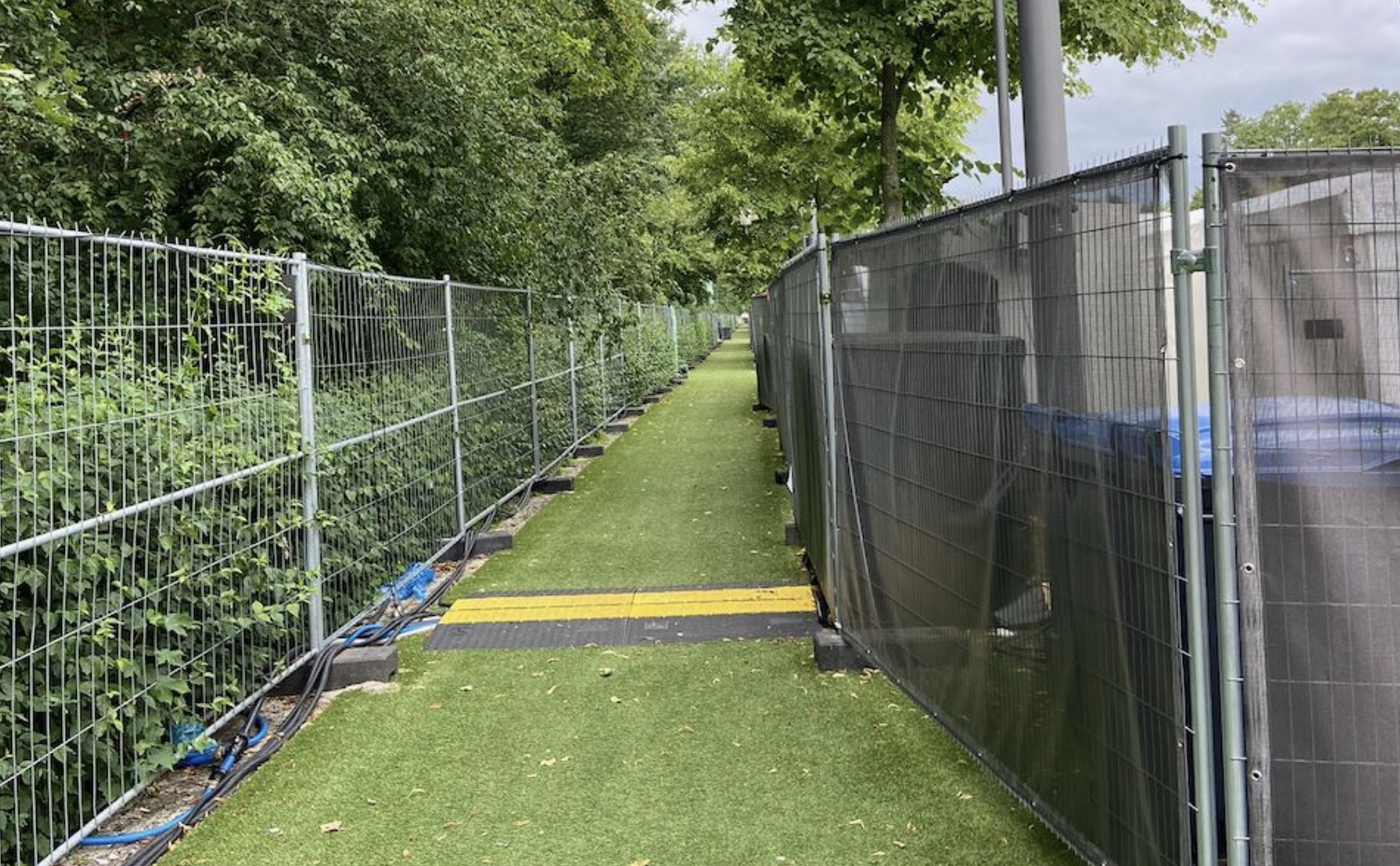
An essential part of a safety concept is defining protective measures–such as planning clearly marked escape routes that must remain unobstructed at all times during the event.
A safety concept is not automatically mandatory. It is regularly required for larger events (from 5,000 people present at the same time) or for higher-risk events. In the permit process, it is reviewed by the police, fire brigade, and the approval authorities.
Note: More detailed information and a template are provided by the guide “Safety at events” by the state of NRW.
Medical concept
A medical concept describes how medical coverage for your event is organised. The medical service is not part of the public emergency service and must be commissioned by you at your own expense.
The medical service:
- Provides qualified first response on site
- Calls emergency medical services immediately via 112 in medical emergencies
- Guides emergency services at the location
Sizing is risk-based. Key factors are the number of people present at the same time, the type of event, and specific risks. For events without special risk, the following orientation values apply:
- Below approx. 500 people present at the same time: usually no medical service required
- 500–1,000 people present at the same time: at least two helpers
- 1,001–3,000 people present at the same time: at least four helpers
- More than 3,000 people present at the same time or increased risk: coordinate sizing with the Berlin Fire Brigade (Berliner Feuerwehr)
Note: More detailed information can be found in the information sheet of the Berlin Fire Brigade (as of 03/2025).
Legal framework
Permit process
Police and fire brigade are usually involved in the permit process by the responsible authority. If restrictions in public transport or waste disposal are expected, BVG and BSR should also be informed early. Even if no formal safety concept is required, you should assess your event’s safety risks independently. If you are unsure, coordinate early with the approval authorities.
Orientation values from practice (not binding):
- From around 500 expected people: informing the police can be helpful
- From around 1,000 expected people: an inquiry about medical services is often recommended
Note: These notes do not replace an official decision. For questions, you can find a list of responsible contacts in the contact list for all districts.
Assembly venue law
Under Section 23 of the Operating Ordinance (Betriebs-Verordnung – BetrVO) applicable in Berlin, a location is typically considered a public assembly venue if it falls into one of the following categories:
- assembly rooms that each hold more than 200 visitors
- outdoor assembly venues with stage / performance areas and grandstands that are not temporary structures and together hold more than 1,000 visitors
- sports stadiums and outdoor sports facilities with grandstands that are not temporary structures and hold more than 5,000 visitors
Whether these rules apply in a specific case depends on the structural design and the use of the event location / venue. Many locations in public space do not meet these requirements. Nevertheless, individual requirements (e.g. escape routes, visitor numbers, or calculating required toilets) are often used as professional orientation in the permit process.
The basic structural and operational duties (e.g. fire safety, escape routes) lie with the operator of the assembly venue (usually not with you as the organizer / event organizer). Still, your setup must fit the approved use and the permitted occupancy. You must not impair safety-relevant infrastructure–especially emergency and escape routes.
Note: Ask the landlord or property owner early whether the location is operated as an assembly venue under BetrVO and what the maximum visitor number is for your specific event.
Temporary structures
Temporary structures include, for example, stages, tents, grandstands, or temporary roofing. For such installations, building-law documentation or inspections may be required. Requirements must be assessed in each individual case.
Note: More detailed information can be found in the Temporary Structures (Stages & Tents) guide.
Safety risks
Below are hazards that can arise in connection with an event. The topics build on each other: first visitor-related risks, then technical and structural aspects, and special hazards from fire, weather, and health.
Visitor-related risks
At events, many people gather in a confined space. This creates specific requirements for planning and management. Risks can affect visitors; at the same time, hazards can also arise from visitors.
Typical risks include:
- High crowd density
- Bottlenecks
- Blocked escape routes
- Lack of orientation
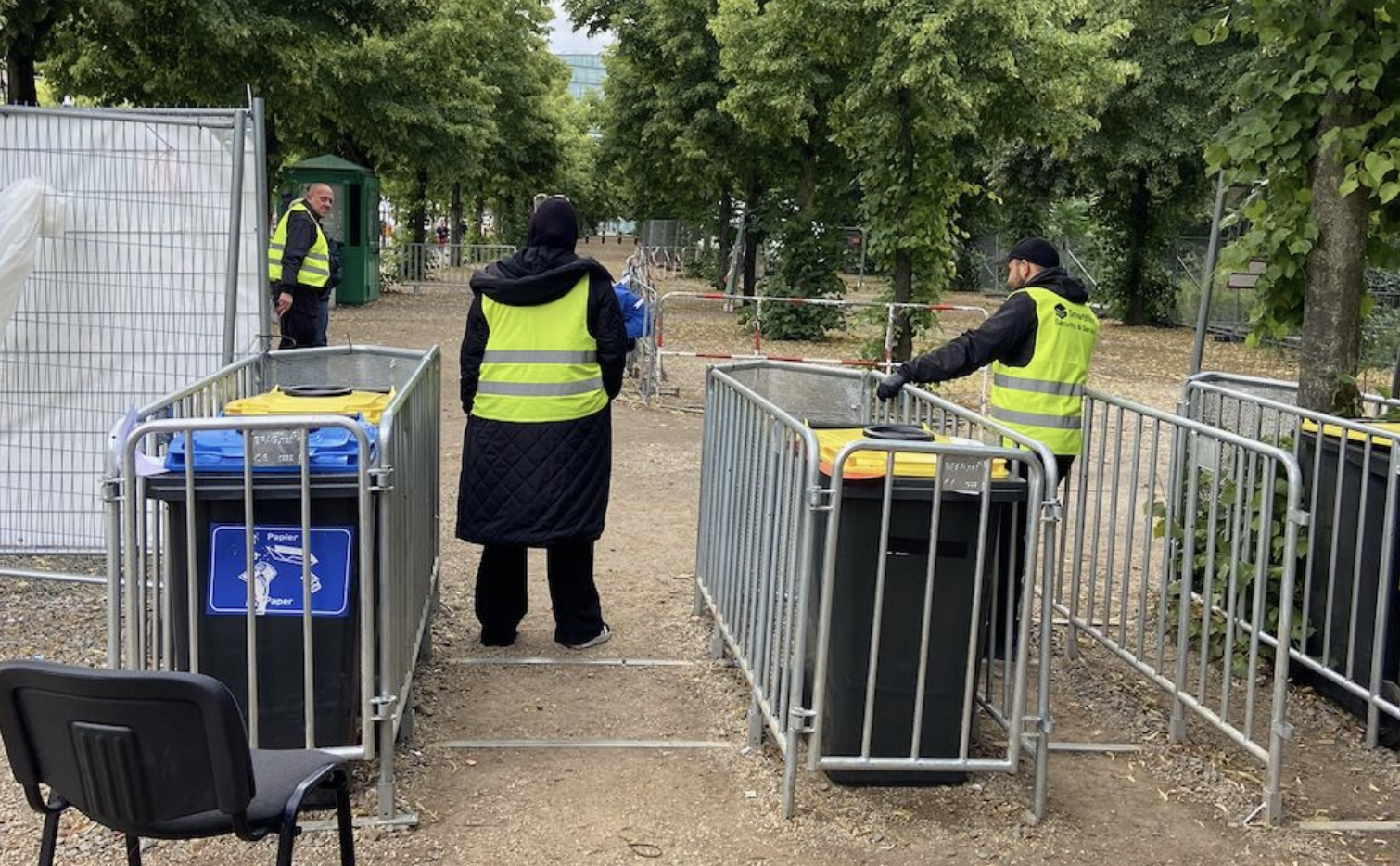
Especially for events on public areas, entry and exit controls can help manage crowd flows and enforce an entry stop if overcrowding is imminent.
Further risks result from visitor behaviour. Strongly intoxicated persons can show aggressive behaviour or misjudge risks. Conflicts between visitors can escalate and affect safety.
For planning crowd flows, you can use the DIM-ICE model.
Technical and structural risks
Beyond people’s behaviour, structural and technical conditions play a central role. They determine whether risks can be controlled or become worse.
This includes in particular:
- Structural stability of temporary installations
- Safe power supply
- Protection against electrical hazards
Structures must be stable and comply with manufacturer specifications. Installations on the event site should be inspected. Visitor capacity must match the available area. Ensure paths can be used accessibly. Escape routes and fire brigade areas must remain free and usable at all times, including during setup and dismantling. Fire brigade access routes and hydrants must not be blocked.
Note: For technical and structural risks, there are information sheets from the Berlin Fire Brigade:
Fire and explosion risks
Certain technical equipment and operating modes increase hazard potential–especially open flames, gas appliances, and pyrotechnic effects. Open fires, pyrotechnics, and heat-generating devices increase fire and explosion risk and are subject to specific requirements.
Liquefied gas
If you use liquefied gas (e.g. at catering stands), the following applies:
- Use only tested and approved devices
- Document inspections
- Store gas cylinders in the event area only in line with applicable requirements
Note: For liquefied gas at events, there is a separate information sheet by the Berlin Fire Brigade.
Fireworks and pyrotechnics
Using pyrotechnics is subject to separate explosives-law rules (Explosives Act and 1st SprengV). Pyrotechnics are not automatically part of the standard event permit and can trigger additional notification or permit requirements.
Even if explosives law generally allows use, it can be prohibited or subject to conditions within the event process for fire-safety or public-order reasons. In public green spaces, open fires and pyrotechnics are often not permitted. Whether use is possible depends on location and the permit process.
Note: More information on pyrotechnics can be found in the Open Fires & Pyrotechnics guide.
Fire extinguishers
For fire safety, fire extinguishers are often required. This requirement can be part of conditions in the permit decision. Fire extinguishers are meant to enable stand staff to extinguish incipient fires early.
Make sure that fire extinguishers:
- Are ready for use and inspected
- Are easy to access and not blocked
- Match the fire hazards present (type and quantity of extinguishing agent)
- Are known to the staff (location and operation)
Note: On fire extinguishers at events, there is a separate information sheet by the Berlin Fire Brigade.
Weather-related risks
Even if structural and technical requirements are met, the safety situation can change at short notice due to external influences. Weather conditions are among the most important dynamic risk factors. Weather risks should therefore be part of your risk assessment. For assessment, you can use official weather warnings, for example from the German Weather Service.
Measures for handling weather risks are not automatically mandatory. They reduce risk and increase your ability to act in critical situations. There are no fixed thresholds for when an event must be stopped. What matters is the concrete hazard situation on site and coordination with the responsible authorities.
Handling strong heat
High temperatures can cause circulatory problems, dehydration, and exhaustion. Particularly affected are children, older people, people with pre-existing conditions, and staff with long shifts.
Possible preventive measures for strong heat:
- Free drinking water or easily accessible, signposted water points
- Shaded areas (e.g. tents, shade sails)
- Breaks for staff and helpers
- Visible information on heat protection (drinking, sun protection)
- Adjusted working times for setup and dismantling (e.g. starting from 06:00)
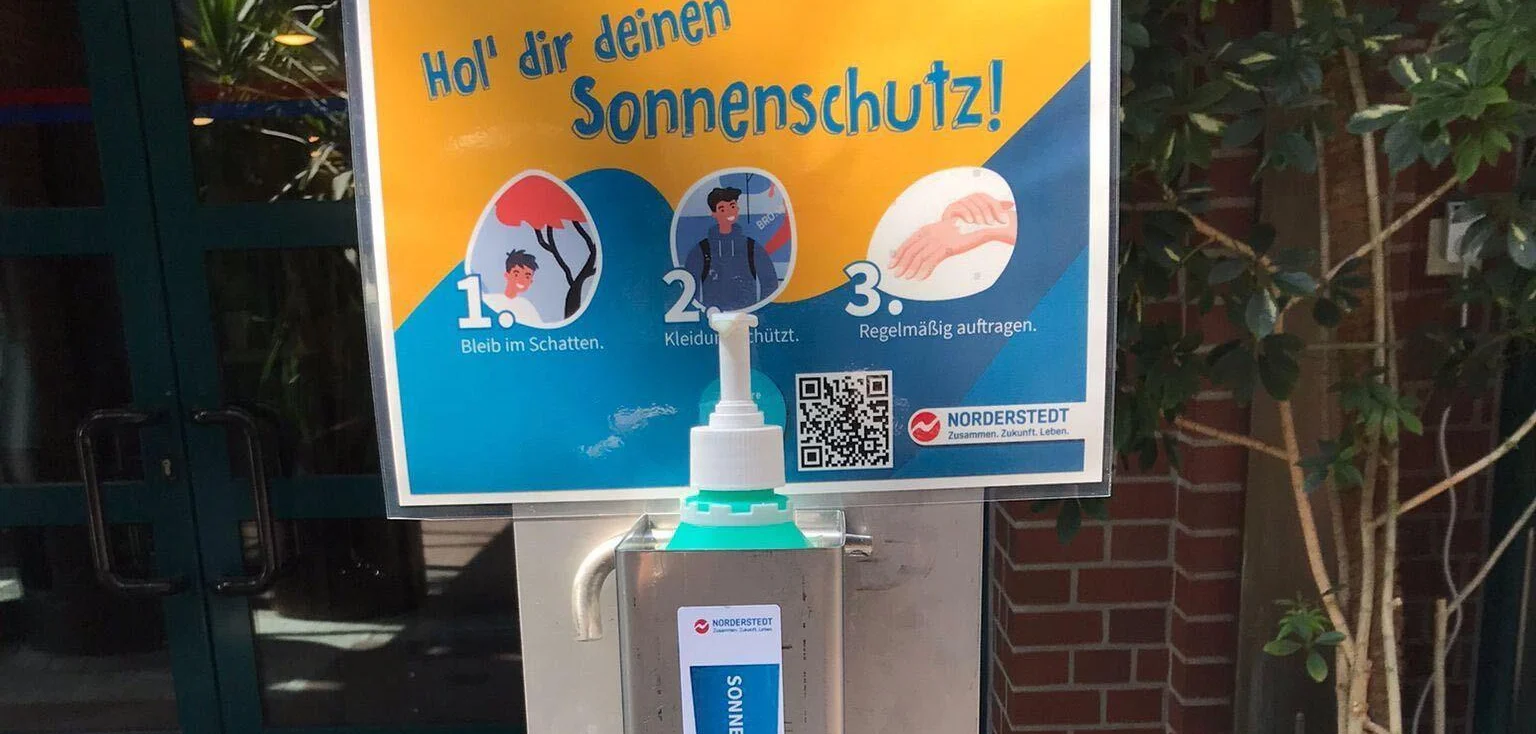
Offers such as free sunscreen dispensers can help prevent sunburn and at the same time raise awareness of weather-related medical risks. (Source: dpa)
Heavy rain and severe weather
Heavy rain, storms, or thunderstorms can make areas unusable at short notice and increase technical risks.
Typical risks include:
- Slippery paths
- Undermined or softened ground
- Water in electrical systems
- Restricted escape routes
- Hazards from stages, tents, structures, loose objects, or falling branches
Possible measures:
- Check whether areas drain water or create puddles
- Protect cables, connectors, and technology from moisture
- Keep paths and transitions non-slip and clear
- Erect structures stably in line with manufacturer specifications
- Interrupt or end the event if there is a concrete hazard
- Keep escape routes usable at all times
- Plan visitor information and diversions
- Check the condition of trees and larger branches before and during the event
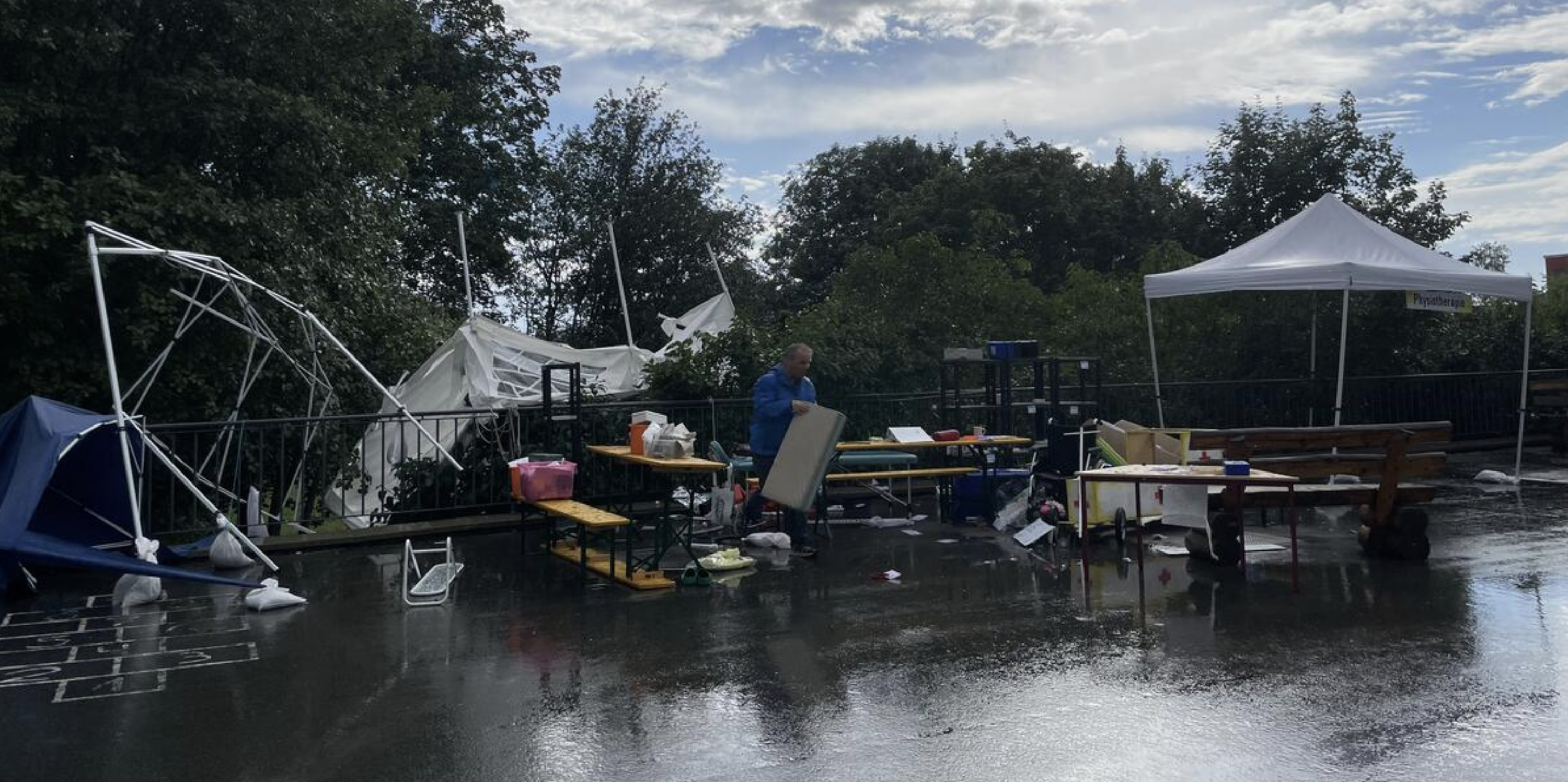
Especially in summer, sudden thunderstorms can be a challenge for unprepared organizers / event organizers. Temporarily interrupting the event can help prevent injuries and protect tents and technology from further damage. See also the section on event organizer liability and insurance. (Source: plauen.de)
Health-related risks
In addition to acute hazards from people, technology, or weather, health-related risks can occur that require organisational measures. A hygiene concept describes how health risks can be reduced.
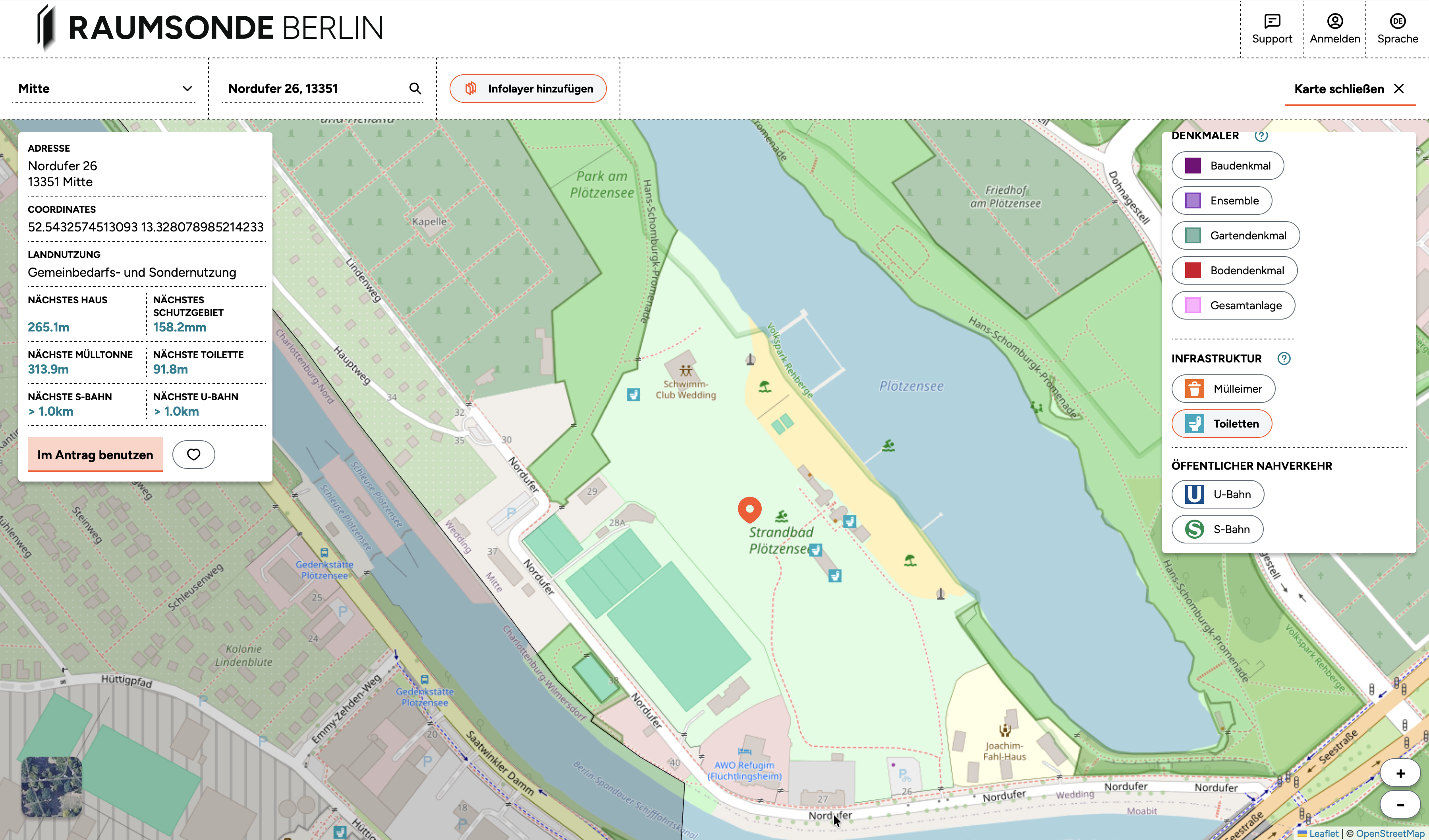
On the Space Map of Raumsonde, you can use the info layers to see where the nearest public toilets are around your planned event site. This is especially important for smaller open-air events.
A hygiene concept can be useful if you:
- Provide food or drinks
- Provide sanitation facilities
- Expect many people to be present at the same time
A simple hygiene concept can include, for example:
- Clear responsibilities
- Rules for cleaning and waste
- Hand hygiene measures
- Procedures for illness cases
Note: Whether a written hygiene concept is required depends on the event format and official requirements. If you are unsure, ask the responsible District office (Bezirksamt).
Event organizer liability and insurance
If you organise an event, event organizer liability insurance is usually required. For permits in public space, corresponding proof of insurance is typically required. Event organizer liability insurance covers your legal liability during preparation, implementation, and dismantling of the event.
- As the organizer / event organizer, you are liable for damage caused by yourself or by companies you commission.
- Event organizer liability insurance covers personal injury, property damage, and financial loss within the agreed insured sum.
- It reviews claims for damages and defends against unjustified or inflated claims.
Many people are involved in preparation, implementation, and dismantling. Even with careful planning, there is a risk of personal injury, property damage, or financial loss. If damage occurs in connection with the event, liability usually lies with the organising person.
Important: event organizer liability insurance helps limit financial consequences and supports you in defending against unjustified claims.
Scope of cover
In the event of damage, the insurer checks whether liability exists and whether the claim is justified. If so, the insurer covers the damage up to the agreed insured sum. Unjustified claims are defended, if necessary also in court.
There is no insurance cover for intentionally caused damage. Fines and penalties are generally not covered by event organizer liability insurance. Legal expenses insurance–if available–typically covers procedural costs, but not the liability damage itself.
Which damages are insured?
In Berlin, there are no state-wide minimum insured sums. Requirements result from case-by-case assessment in the permit process by the responsible District office (Bezirksamt) and can vary depending on the event.
- Personal injury: if a person’s health is affected in connection with the event (e.g. due to an injury), resulting claims may be covered.
- Property damage: if third-party property is damaged (e.g. rented rooms or equipment).
- Financial loss: financial disadvantages that arise directly from an insured personal injury or property damage (e.g. loss of earnings after an injury).
Note: Depending on the type of participation, additional accident insurance may be required or sensible. Clarify requirements early.
Insured persons
Depending on the contract, cover often includes:
- Visitors
- Active participants (e.g. artists)
- Staff and volunteer helpers
- Persons with management, safety, or supervision roles
The exact scope is defined by the insurance contract and should be checked in advance.
Damage to rented buildings and rooms
For damage to components permanently connected to the building, you as the organizer / event organizer are usually liable yourself. Insurance cover often requires a documented inspection before and after the event. Existing and newly caused damage should be recorded in writing and ideally with photos.
Depending on the contract, additional risks may be covered, for example:
- Setup and dismantling work (stages, cables, tents, grandstands)
- Operation of lighting, sound reinforcement, and technical equipment
- Risks related to data protection and internet use
- Providing food and drinks
- Use of pyrotechnics
- Loss of third-party keys
Note: Which risks are actually covered depends on the specific contract. If you want to know more, exchange with other organizers / event organizers in the forum of the Raumsonde Support Center.
Further information
- Hesse Ministry of the Interior and Sport – guide for safety at major events
- Berlin Fire Brigade – event safety
- Berlin Fire Brigade – information sheet “Areas for the fire brigade”
- German Weather Service – official weather warnings for heat, heavy rain, storm, and thunderstorms
- State of Berlin – heat protection
- Ministry of the Interior NRW – safety at events
- KlAnG – measures for climate adaptation at major events
- KlimaEvent: recommendations for protection against extreme weather