
Temporary Structures (Stages & Tents)
Overview
Temporary structures such as stages, tents, grandstands, mobile stands, or inflatable play equipment are usually covered by the German administrative term Fliegende Bauten in event contexts.
For planning, you can distinguish two main cases:
- Temporary structures that do not require approval: Small, standardised setups within certain thresholds. They usually do not require an execution permit — but still must be set up and operated safely.
- Temporary structures that require approval: Larger or more complex setups require an execution permit (with an inspection logbook) before first use, and for each installation usually an installation permit or a notification / inspection at the installation site.
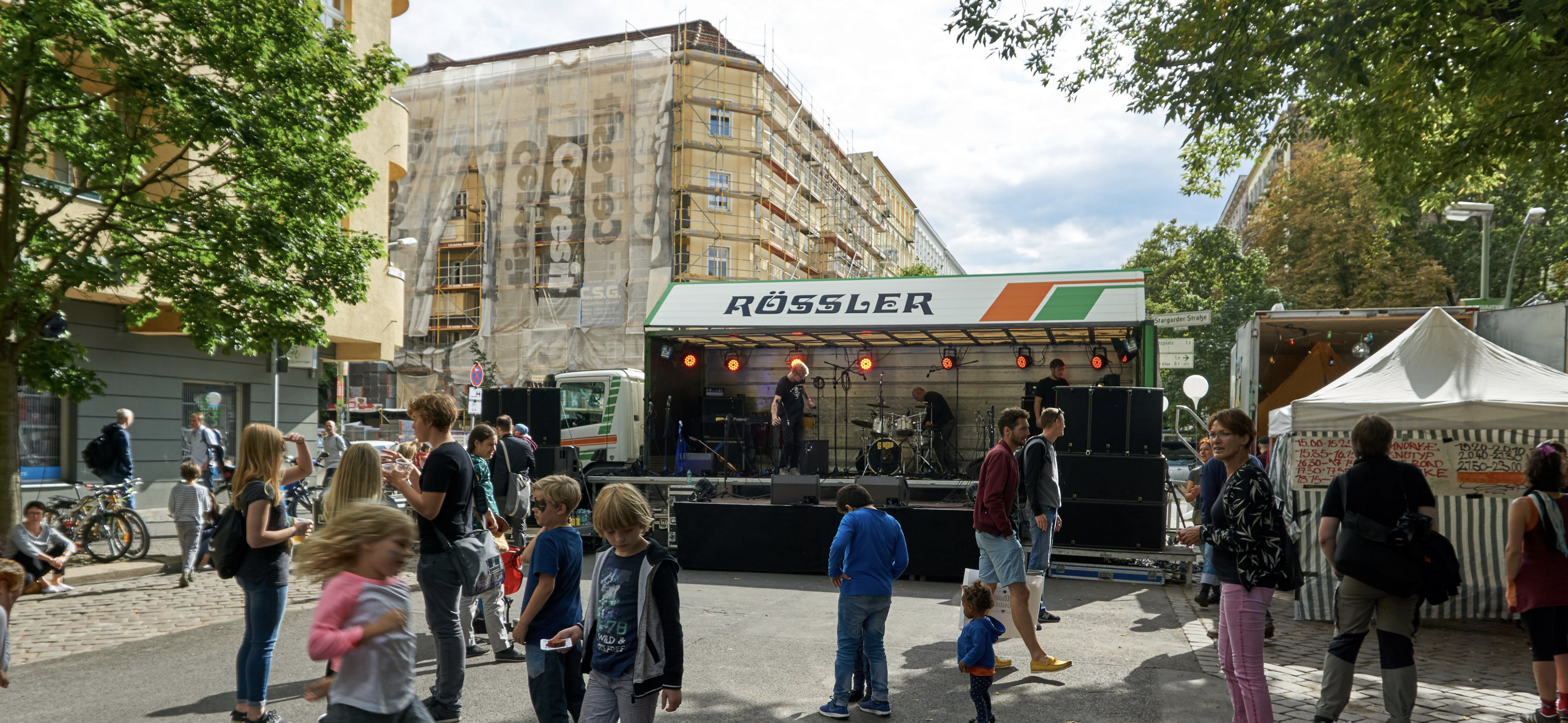
Whether temporary structures require approval depends mainly on size, height, the type of use (walk-on or not), and the type of construction. If in doubt, you can also ask the rental provider about approval requirements and building-law documentation.
The distinction between structures that do not require approval and those that require approval mainly relates to standardised, manufacturer-certified systems (with proven structural stability and material conformity).
Custom constructions are a separate risk case: additional professional review can be sensible or may be required as part of the permit process.
Note: If you are still unsure which permits your event needs overall, start with the Overview – Permits guide.
Application and event concept
In any case, you should make temporary structures transparent during other permit procedures (e.g. for using public streets and squares or public green spaces) and show them clearly on the site plan. This also applies if no separate building permit is needed, as with temporary structures that do not require approval.
- Mention them in the application
- Clearly mark them in the site plan
- Describe them in the event concept (incl. dimensions, location, intended use)
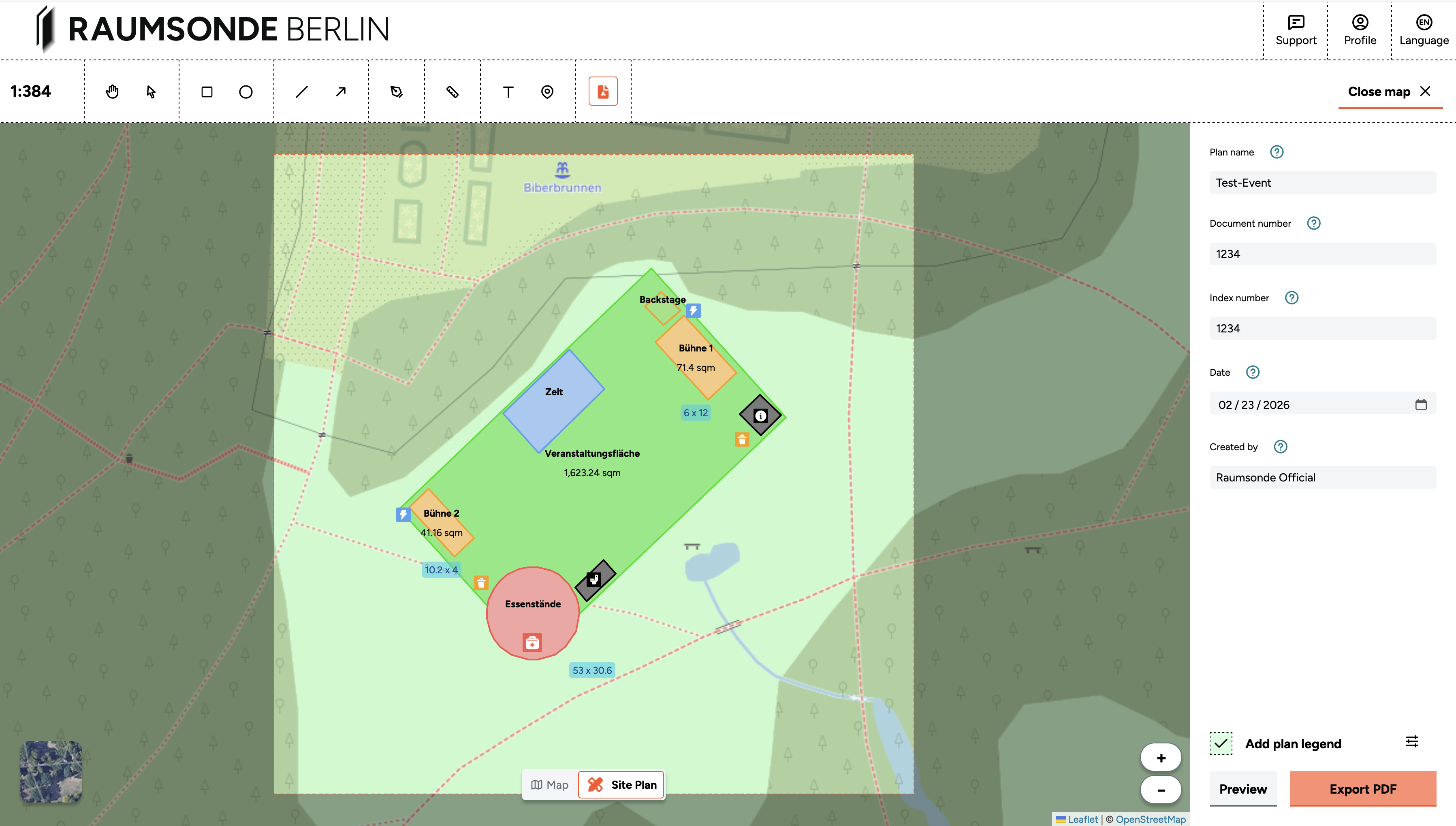
The Site Plan Tool of Raumsonde helps you clearly mark temporary structures during application preparation.
Structures that do not require approval
According to common administrative practice based on the Building Regulations for Berlin (BauO Bln),
temporary structures do not require approval if their characteristics remain below the following thresholds.
Temporary structures up to 5 m height that:
- Are not accessible to visitors
- Are operated for children and have a speed of ≤ 1 m/s
Temporary stages (incl. canopies and superstructures) up to:
- 5 m height (including roofing and other superstructures)
- 100 m² gross floor area
- 1.50 m stage height / floor height
Ground-level festival tents and walk-in sales stands:
- In mobile construction
- Up to 75 m² floor area per unit
Inflatable play equipment (bouncy castles) with:
- Walkable area up to 5 m height
- Covered areas where the distance to the exit is ≤ 3 m, provided the roof is structurally secured against sinking
- Covered areas up to 10 m
“Does not require approval” does not mean “no rules apply.” You must comply with all relevant requirements (e.g. structural stability, suitable ground conditions, fire safety, approved materials, safe setup and dismantling processes).
Manufacturer specifications (e.g. on ballast, wind limits, guying) also apply and must be followed; you can find them in the respective manuals.
Note: The Safety & Insurance guide contains more information on safety planning and other safety risks at events.
Structures that require approval
Temporary structures that exceed the thresholds listed under Structures that do not require approval
require an execution permit before first erection and commissioning. For each later installation, you usually also need an installation permit, or a notification / inspection at the installation site (depending on the individual case).
Execution permit
In general: temporary structures that require an execution permit may only be used if their installation has been notified to the building authority at the installation site, and the inspection logbook (Prüfbuch) is presented.
In Berlin, the Senate Department responsible for building matters has determined that the TÜV (not the building supervision authority) is responsible for temporary structures.
- The permit is valid for up to 5 years and can be extended by up to 5 years each time.
- Permits are entered into an inspection logbook (Prüfbuch). A copy of the building documents bearing the permit endorsement must be attached to the inspection logbook.
- Permits from other federal states generally also apply in Berlin.
- If your address changes or the structure is sold to a third party, you must inform the competent authority; the change is documented in the inspection logbook.
Note: In Berlin, TÜV Rheinland Industrie Service GmbH, Regional Office Berlin is responsible for temporary structures. You can find details in the Support Center contact list: Other contacts.
Installation at the event site
You may only erect temporary structures with an execution permit if the building authority at the installation site has been notified and you can present the inspection logbook (installation permit / notification).
Nevertheless, the authority can:
- Require an on-site inspection (entry in the inspection logbook)
- Impose conditions
- Prohibit erection if local conditions or safety risks require it
This can be relevant, for example, if:
- Structural stability is not (or no longer) ensured
- Approved specifications are not followed
- The structure is walkable / accessible
- The structure is operated over a longer period (possible interim checks)
Custom constructions and other structures
The categories above mainly refer to standardised constructions with type approvals and manufacturer releases. For custom constructions (without type approval or manufacturer guarantees), stricter requirements often apply to your duty of care.
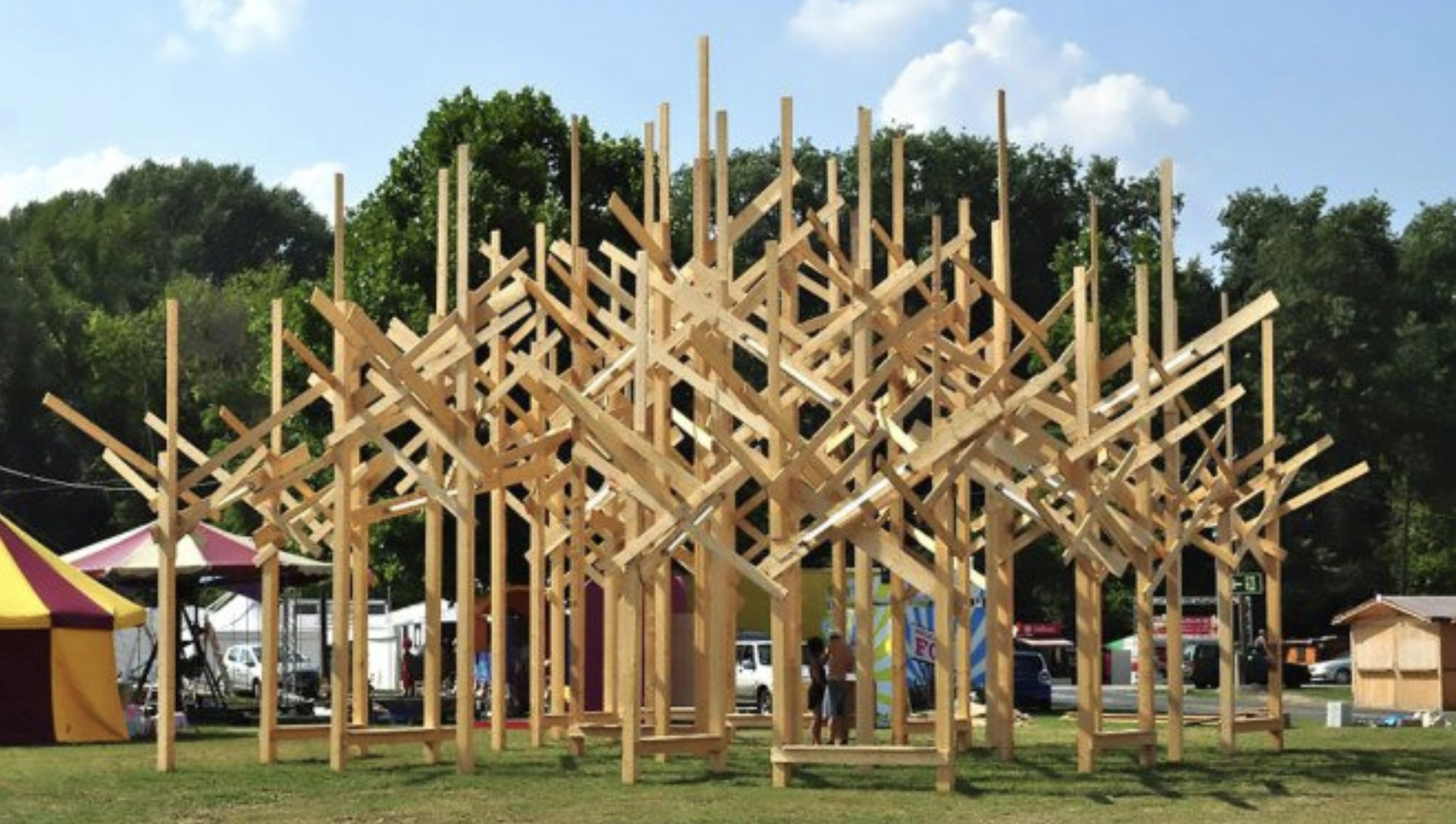
For custom structures — especially if they are not designed and built by qualified professionals — bring in a specialist early (engineer / architect) to reduce risks and liability. (Source: inhabitat.com)
This includes, for example:
- Handmade stages or platforms
- Seating grandstands
- Masts and structures for banners / flags
- Individual roofing or special superstructures
Here you must ensure safety and compliance with standards, including:
- Structural stability (wind loads, ballast, anchoring)
- Fire safety
- Escape and rescue routes
- Fall protection
- Accessibility (where required)
Note: The Safety & Insurance guide contains more information on safety planning and other safety risks at events.
Outdoor advertising
Advertising installations (banners, posters, structures) can — depending on size, type, and duration — require an additional permit. This procedure is handled via the district building and housing supervision offices. It is often simpler than for structural installations, but should be clarified in advance with the responsible authority.
Legal basis
- Section 76 Permit for temporary structures (Building Regulations for Berlin – BauO Bln)
- Section 10 Outdoor advertising installations, vending machines (Building Regulations for Berlin – BauO Bln)
- Section 61 Projects not requiring a procedure, removal of installations (Building Regulations for Berlin – BauO Bln)