

Public Streets and Squares
Overview
This guide explains how to apply for a special use authorisation for public streets, sidewalks, and squares, which special use fees may apply, and when an additional road-traffic permit or order is required.
Note: If you are still unsure which permits your event needs overall, start with the Overview – Permits guide.
What does special use mean?
Public streets, sidewalks, and squares are intended for general traffic and public use. This use is legally defined as common use. As soon as you use these areas for an event, this becomes special use.
This applies, for example, if you:
- Set up stages, stands, or technical equipment
- Use areas specifically for the audience
- Cordon off public areas
- Place cables, tents, or other structures in street space
It does not matter whether the event is non-commercial, whether admission is charged, or how long it lasts. What matters is that public street space is used differently than intended in everyday use.
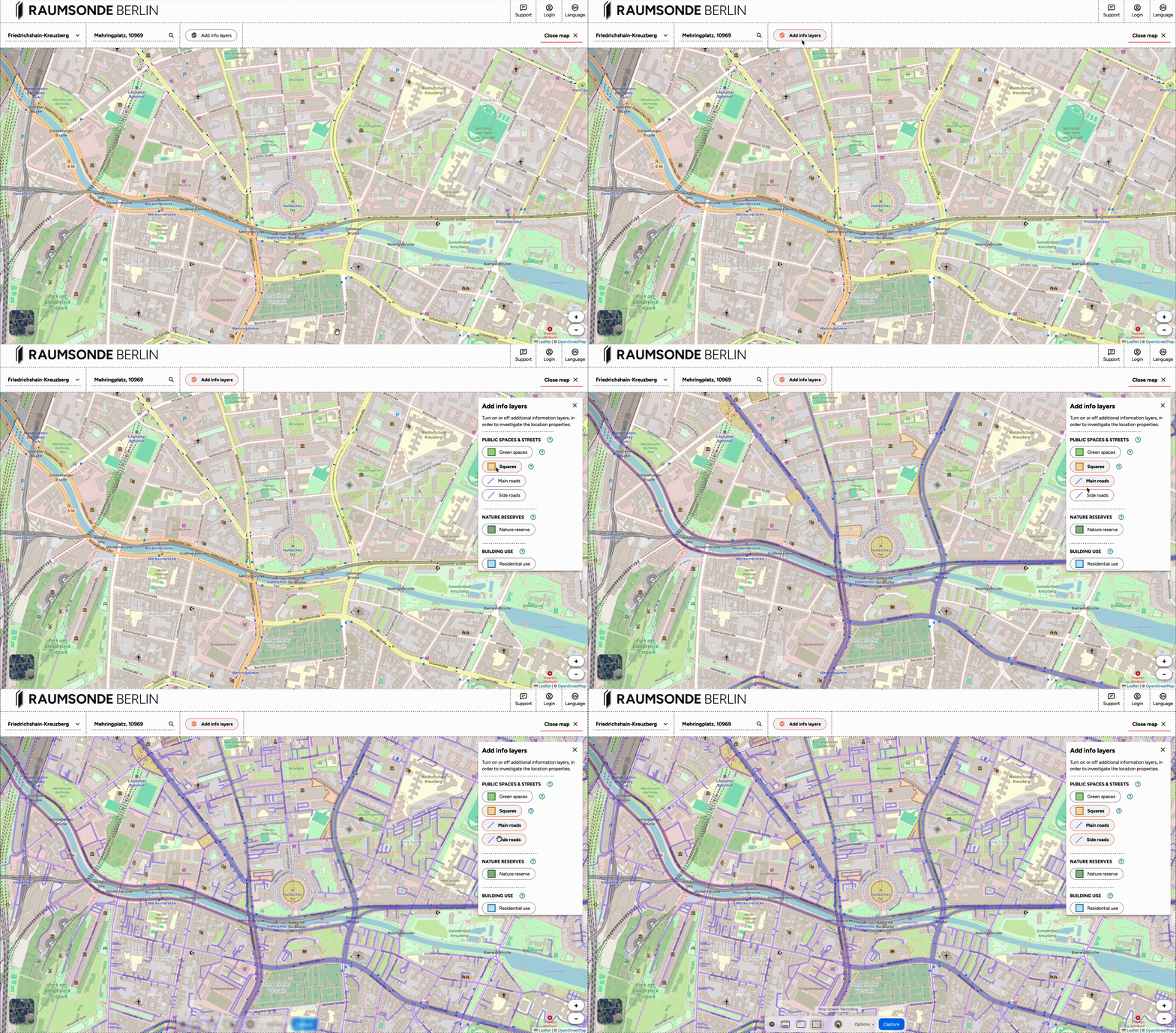
On the Space Map of Raumsonde, you can use the info layers to see whether your event site is on public streets or squares.
Do I need a special use authorisation?
You need a special use authorisation if your event takes place wholly or partly on public street land and this area is no longer fully usable for everyone.
Public street land includes:
- Main and side streets
- Sidewalks
- Squares
Sensitive areas in street space
Even on public street land, there can be sensitive areas. This includes both public green elements and protected monuments.
Public green
Public green includes, for example, street trees and tree pits, greened central reservations, and roadside green strips. If your event affects or burdens these areas, special requirements may apply–for example for protecting soil, roots, or vegetation.
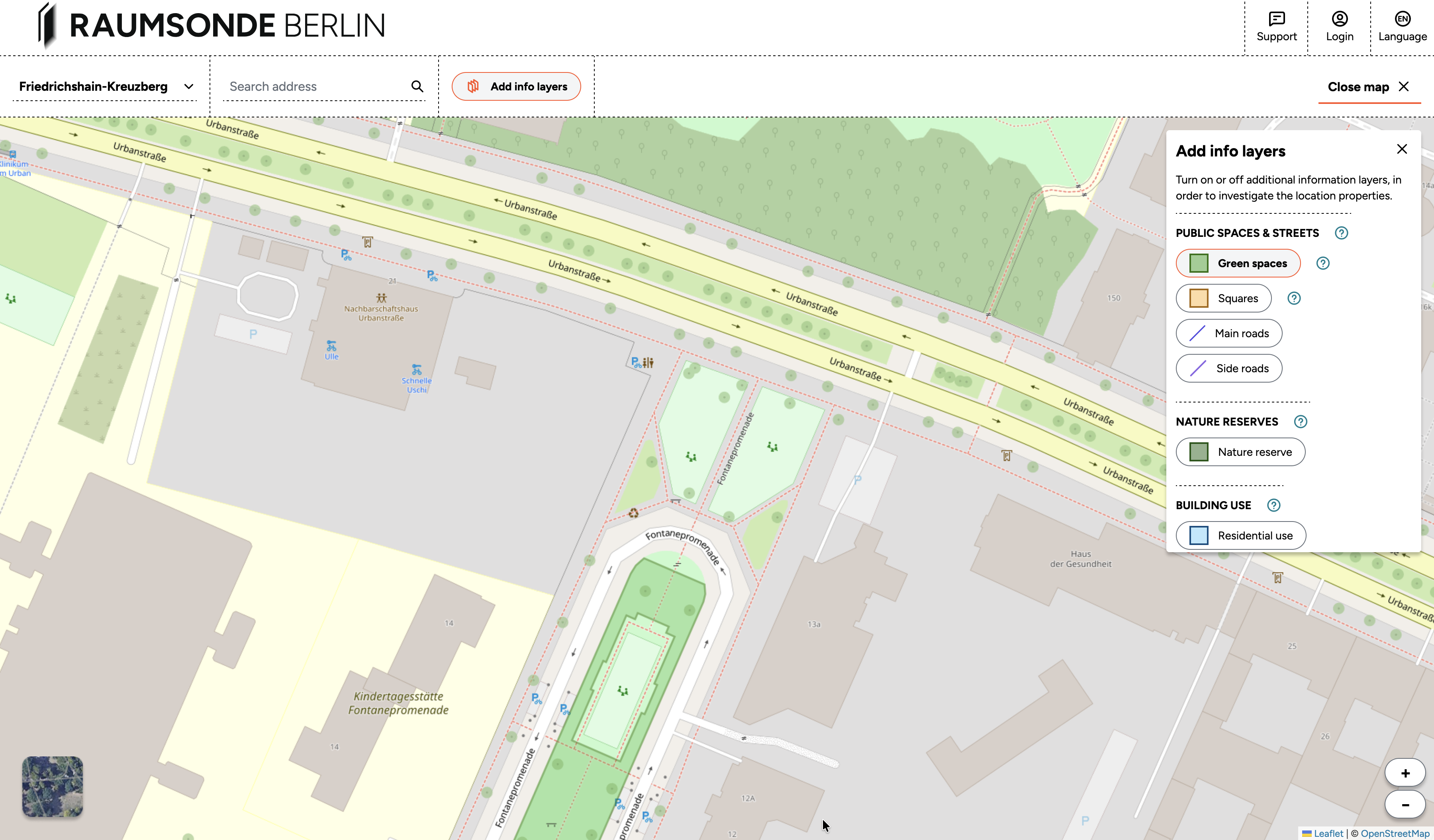
If your event takes place on green surfaces near streets that are not officially designated as green spaces–like the front part of Fontanepromenade shown here–it can be sensible to also consult the Public Green Spaces guide. There you will find hints on how public green spaces can be protected.
Monument protection
Some streets, squares, or elements in street space can be protected monuments. The legal basis is the Berlin Monument Protection Act (Denkmalschutzgesetz Berlin – DSchG Bln).
Monument protection is not a separate permit procedure for events. However, it can influence:
- Whether and how areas may be used
- Which structures are permitted
- Whether adjustments are required
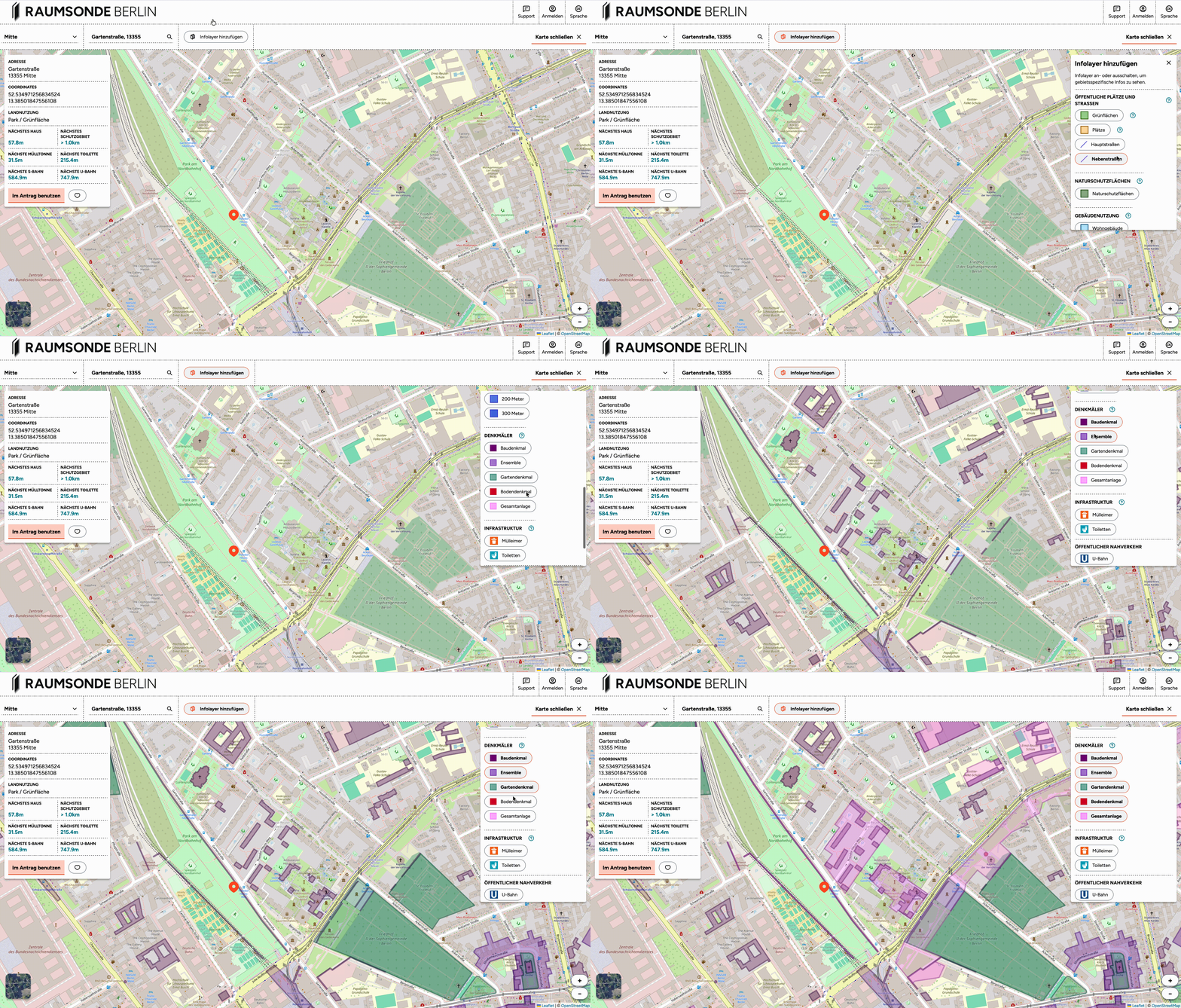
On the Space Map of Raumsonde, you can use the info layers to see whether your event site is near a protected monument area.
A review can take place within the registration procedure by the district’s lower monument protection authority. If you are unsure about monument protection, address this early when submitting your application. This allows protection requirements to be considered and avoids later changes.
Permit process
Responsibility
The special use authorisation is usually issued by the Streets and Green Spaces Department (Straßen- und Grünflächenamt) of the responsible District office (Bezirksamt) in whose area the event takes place. Often, a special-use unit is responsible there.
In individual cases, certain special uses (e.g. temporary uses in front of shops) can also be handled by other units such as the Public Order Office (Ordnungsamt). If traffic measures are required, the road-traffic authority is additionally involved. There is no central coordinating office.
Note: A list of responsible contacts for special uses in the District offices (Bezirksämter) can be found in the contact list for all districts.
Processing time
For events in public street space, plan for a processing time of about 6 to 9 weeks. Duration differs between districts. If extensive traffic measures or multiple offices are involved, it can take longer.
Fees
Special use fees usually apply for using public street space.
What are fees charged for?
Fees are charged for time-limited use of public areas. The amount is based on the Berlin fee ordinance and depends on:
- Size of the used area / surface
- Planned duration of use
- Type of use (e.g. stage, stand, technical equipment)
- Non-profit status
Special uses without fees
Under the Berlin Special Use Fees Ordinance, some special uses are fee-free, including if they are carried out by:
- Public-law corporations, institutions, or foundations
- Recognised non-profit organisations, if the special use directly serves the implementation of non-profit purposes
Fee-free does not mean that no permit is required.
Administrative fees
Independent of special use fees, administrative fees may apply. They cover the effort for:
- Checking and processing applications
- Involving other offices
- Issuing permit decisions
Administrative fees can also arise if applications are changed, additional documents have to be submitted, or an application is rejected.
When do you additionally need a road-traffic permit?
The special use authorisation concerns the use of public areas. As soon as an event affects traffic, a road-traffic permit is added.
A road-traffic permit or order is required if your event, for example:
- Closes streets or lanes
- Suspends parking spaces
- Diverts sidewalks or cycle paths
- Changes access routes
- Affects bus or delivery traffic
This applies even if the measures are only temporary or only for a few hours. The goal of the procedure is to ensure traffic safety and keep rescue routes clear.
Responsibility for traffic measures:
- For side streets, responsibility lies with the District office (Bezirksamt)
- For main roads or central areas, responsibility is usually with the Senate Department
Which office is responsible depends on the location and scope of the event.
Traffic sign plan and traffic plan
If road-traffic measures are required, you usually have to submit a traffic sign plan or traffic plan.
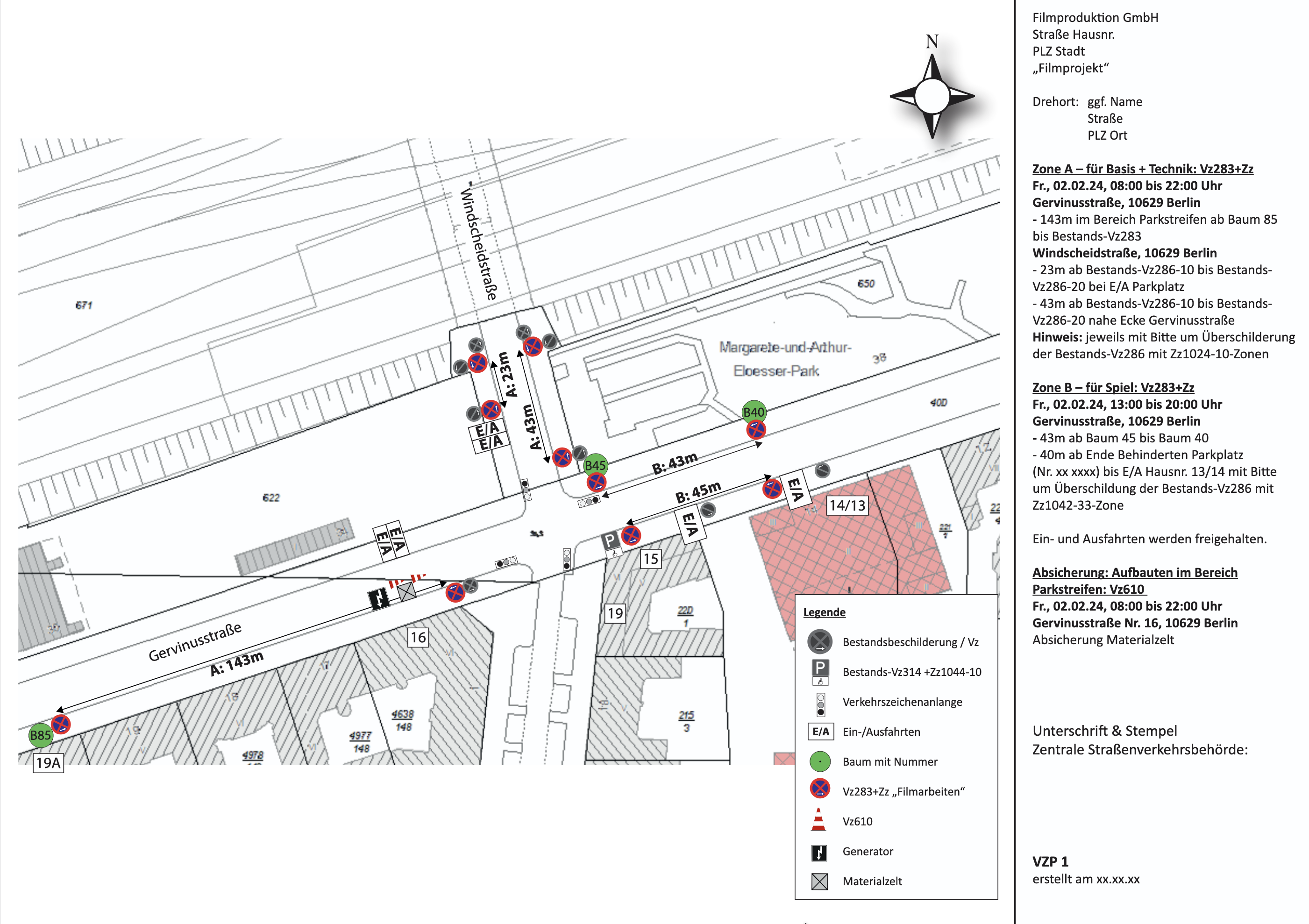
Example of a traffic plan. In the permit process, it can be required in up to five copies. The exact number is determined by the responsible District office (Bezirksamt). (Source: BBFC)
This traffic plan should show:
- Which areas are closed
- Where barriers are placed
- Which traffic signs are installed
- How diversions run
- How rescue routes remain secured
Note: Further information and template examples for traffic sign plans can be found on the Berlin Brandenburg Film Commission (BBFC) page.
Typical documents
For special uses and road-traffic permits, documents are usually required that show area use and possible impacts.
Typical documents include:
- Site plan
- Information on expected visitor numbers
- Proof of liability insurance for organizers / event organizers
- For traffic interventions: traffic sign plan or traffic plan
Which documents are required in an individual case is decided by the responsible District office (Bezirksamt).
Note: A more detailed description of the site plan, event concept, and further annexes can be found in the Overview – Permits guide.
Legal basis
The procedures described in this guide are based on legal regulations. You do not need to know them in detail to submit applications. They are listed here to make processes transparent and traceable.
Key bases are:
- Berlin Road Law (Berliner Straßengesetz – BerlStrG) – special use of public streets
- Road Traffic Ordinance (Straßenverkehrsordnung – StVO) – traffic rules for events
- Berlin Special Use Fees Ordinance – fees and fee exemptions
- Berlin Administrative Fees Ordinance – administrative fees
Note: Further information on the permit process can be found on the Berlin Service Portal and on the websites of the responsible District offices (Bezirksämter) (see the contact list).