

Food & Beverage (Catering)
Catering
Food and beverages are a central part of many events in public space. They influence not only what you offer to visitors, but also planning, permits, hygiene, waste management, and sustainability.
Which requirements apply depends, among other things, on:
- Price: Are food and drinks sold or provided for free?
- Providers: Do you organise the offer yourself or involve external providers?
- Food and drinks offered: non-alcoholic or alcoholic, packaged or unpackaged / open.
This guide helps you understand the requirements for catering offers so you can plan safely and transparently. It provides orientation on responsibilities, the permit process, different hygiene requirements, reusable and deposit systems, and the sustainable design of food and beverage offers at events.
Note: Responsibilities and procedures can differ depending on the Berlin district. Clarify open questions early with the responsible office.
Requirements for catering offers
The Catering Act (Gaststättengesetz) can also be relevant for events. For time-limited events, a permanent catering licence is usually not required. However, if alcohol is served, a temporary catering permit under Section 12 of the Catering Act (Gestattung nach § 12 Gaststättengesetz) is usually required.
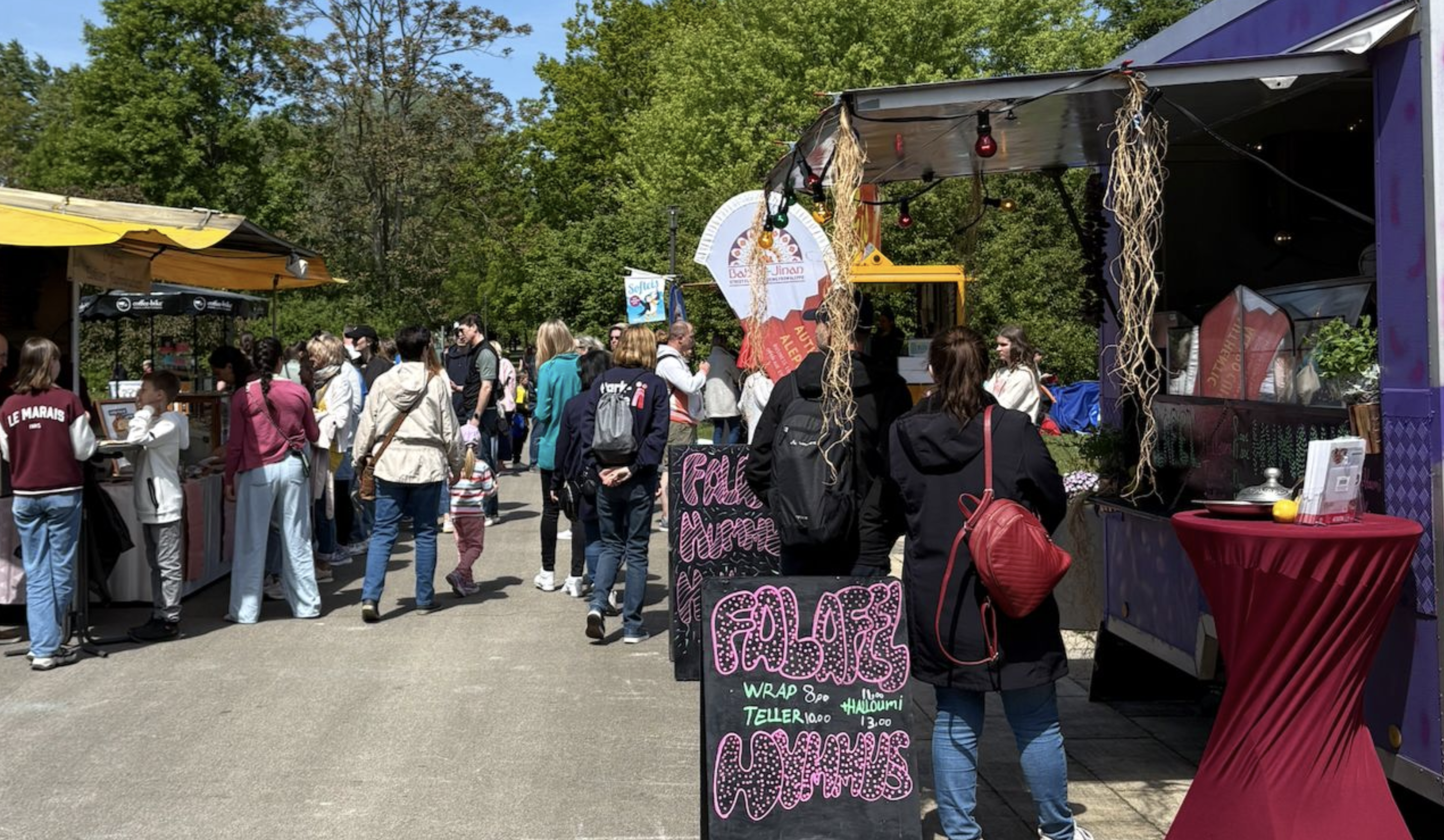
A catering business exists if drinks or prepared food are offered commercially for consumption on the spot. This also applies if sales are only temporary, for example at stands or mobile beverage counters.
If only non-alcoholic drinks or food are offered, no catering-law permit is usually required. The responsible Public Order Office (Ordnungsamt) decides the classification in each individual case (see the section on Registration and permit).
Depending on how your offer is set up, three typical constellations can be distinguished.
Non-commercial distribution
In cases of non-commercial distribution (e.g. a cake bazaar where food is given out against donations and no profit is made), no catering-law permit is usually required. If you are still unsure whether registration is necessary, clarify this in advance with the responsible Public Order Office (Ordnungsamt). People who hand out food or handle open food usually need hygiene training. Further hints can be found in the section on Hygiene and operation.
Own sales
If you or your team sell food or drinks yourselves, this is a commercial offer. For serving alcoholic beverages, a temporary catering permit under Section 12 of the Catering Act (Gestattung nach § 12 Gaststättengesetz) is usually required. You apply for this at the responsible Public Order Office (Ordnungsamt).
People handling open food or drinks need hygiene training. Plan enough lead time, as processing an application can take several weeks. If only non-alcoholic drinks and food are offered, a catering-law permit is usually not required. However, the binding classification is made by the district’s Public Order Office.
External providers
If external catering providers sell food or drinks at your event:
- Mobile providers usually have a travelling trade licence and hygiene training for their staff.
- You should name the provider (person or organisation) in the event concept (name, legal form, and, if applicable, commercial register entry).
- Depending on district requirements, documents must be submitted for review.
- Even with external providers, you as the organizer / event organizer remain involved in coordination with the authority.
Registration and permit
You register catering offers first with the District office (Bezirksamt) in which the event takes place. There is no central point of contact for all of Berlin.
The first contact is usually the responsible Public Order Office (Ordnungsamt). They check:
- whether your catering offer requires approval,
- which permit or temporary authorisation is required,
- whether other offices need to be involved (e.g. the health office or veterinary office).
Reliable information on responsibilities, procedures, and contact addresses can be found on the Berlin Service Portal website. There you can submit many applications online or be forwarded directly to the responsible District office (Bezirksamt).
Note: Because workflows can differ by district, it is sensible to clarify open questions early with the responsible Public Order Office (Ordnungsamt). A list of responsible contacts can be found in the contact list for all districts.
Which authorisation is required?
Offers without alcohol
If you only offer non-alcoholic drinks and food, no catering-law permit is usually required. The classification is made by the Public Order Office (Ordnungsamt) on a case-by-case basis. Regardless, food law requirements apply (e.g. hygiene, training).
Serving alcoholic beverages
If you serve alcoholic beverages temporarily as part of an event, a temporary permit under Section 12 of the Catering Act (GastG) (Gestattung nach § 12 Gaststättengesetz) is required. The permit then applies only for the specified period, only for the specific location, and is issued with conditions for a limited time. A prerequisite is a special occasion of short duration, such as street or city festivals, anniversaries, sports events, or Christmas markets.
Note: A regular catering business licence is usually only required for permanent operation and is not the standard case for temporary events.
Temporary catering permit (Section 12 GastG)
Typical application contents
As a rule, a written event concept is required, including information on:
- Type and purpose of the event
- Date, times, and duration
- Event location / venue (incl. site plan)
- Expected number of visitors
- Type of catering offer
- Serving of alcoholic beverages
- Commerciality of the event
Required documents
Depending on the constellation, the following documents may be required:
- Application for a temporary permit under Section 12 GastG
- ID document of the applicant
- Certificate of good conduct and extract from the central trade register (if serving alcohol)
- Proof of catering instruction (for repeated applications)
- Travelling trade licence for external providers
- Hygiene training certificates for the persons involved
- Site plan
Which documents are required in detail is determined by the Public Order Office (Ordnungsamt) of the respective district.
Catering instruction
Catering instruction under Section 4 GastG is required if alcoholic beverages are served regularly or repeatedly. For one-off events with a permit under Section 12 GastG, it is often not mandatory, but may be required by the district in individual cases. The decision is made by the responsible Public Order Office (Ordnungsamt). The permit can be applied for online via the Berlin Service Portal.
Note: The application under Section 12 GastG relates exclusively to serving alcoholic beverages. Information on food, hygiene, reusables, waste, or sustainability is not part of the temporary permit, but can be part of the event concept or subject to other checks.
Hygiene and operation
If food is handled at your event, basic hygiene rules apply:
- Hygienic storage, preparation, and distribution of food
- Maintaining suitable temperatures and holding times
- Using trained and instructed staff
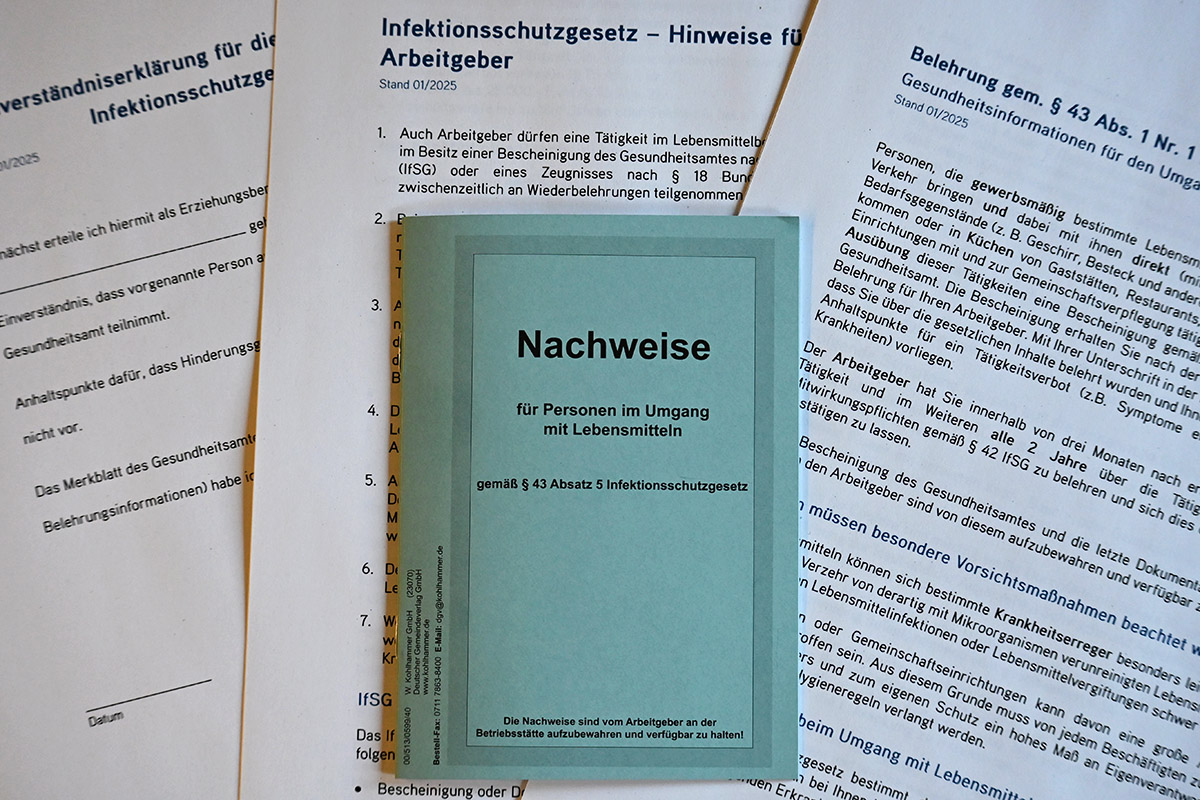
You should also ask external catering providers for hygiene documentation for their staff, because you as the organizer / event organizer remain responsible for coordination with the responsible authority. (Source: main-taunus.de)
Simple self-checks help you keep an overview. They should fit the specific setup and clearly define what is checked and who is responsible. Legal bases include, among others, the Food and Feed Code (Lebensmittel- und Futtermittelgesetzbuch) and the Food Hygiene Regulation (Lebensmittelhygieneverordnung).
Hygiene training
People who handle open food or drinks at an event need an instruction under Section 43 of the Infection Protection Act (Infektionsschutzgesetz – IfSG). This also applies to voluntary work and one-off events.
The instruction is carried out by the responsible health office and must be available before the activity starts. Whether hygiene training is required in a specific case should be clarified early with the responsible health office or veterinary office. Necessary knowledge is conveyed there, such as critical temperatures, holding times, and basic microbiological relationships.
Note: You can apply online via the Berlin Service Portal for an infection protection instruction including a certificate, for a fee.
Beverage dispensing systems
Beverage dispensing systems are systems used to dispense drinks for consumption on site (with or without pressure). They may only be operated if they have been technically tested and are hygienically sound. Only put a system into operation after a qualified person has carried out the initial inspection. The inspection should be documented.
Waste from catering
For waste from catering work areas, the requirements of the Commercial Waste Ordinance (Gewerbeabfallverordnung – GewAbfV) apply. This particularly affects separate collection of recyclables in kitchen and backstage areas. Under Section 3 GewAbfV, this commercial household waste (municipal waste) must be collected separately as far as this is technically possible and economically reasonable. This applies in particular to recyclables such as paper, cardboard, glass, plastics, metals, and organic waste.

Commercial waste from food stands and vendors should be collected as far as possible in a separate and secured area.
What must be collected separately in individual cases depends on event size, the type of waste, and local conditions. For smaller events, simple, clearly labelled containers in work areas are often sufficient. The implementation of waste separation should be planned before the event and coordinated with all involved providers.
Food waste
Food waste arises especially during food preparation and from uneaten leftovers from guests. This includes waste containing animal components or waste that has been in contact with them.
This waste is subject to special disposal requirements. Disposal via organic waste bins is generally not permitted. It must be collected separately and disposed of properly via approved disposal companies.
Fats and oils
Fats and oils from food preparation must be collected separately. They must not be disposed of via drains or the sewage system, as this can damage wastewater infrastructure. Before the event, clarify how collection, interim storage, and pickup will be organised–for example via suitable containers and a specialised disposal company.
Reusable and deposit systems
Reusable and deposit systems are a central building block for waste prevention in catering offers.
- Use reusable tableware, reusable cups, and reusable cutlery wherever possible.
- Deposit systems should be simple, consistent, and regulated the same way for all stands.
- Make sure return points are clearly visible and easy to access.
- Clarify in advance who is responsible for issuing, return, cleaning, and storage.
Note: Further practical guidance on waste separation and disposal can be found in the Waste Management & Sustainable Procurement guide.
Sustainable catering offer
A sustainable catering offer affects the environment, the climate, and acceptance of the event. When choosing food and drinks, you can consider the following aspects:
- Seasonal and regional products to reduce transport distances
- Organically produced food where available
- Vegetarian and vegan options
- Simple dishes with few ingredients
- Realistic quantity planning to avoid food waste
- Passing on surplus food to foodsharing initiatives instead of disposing of it
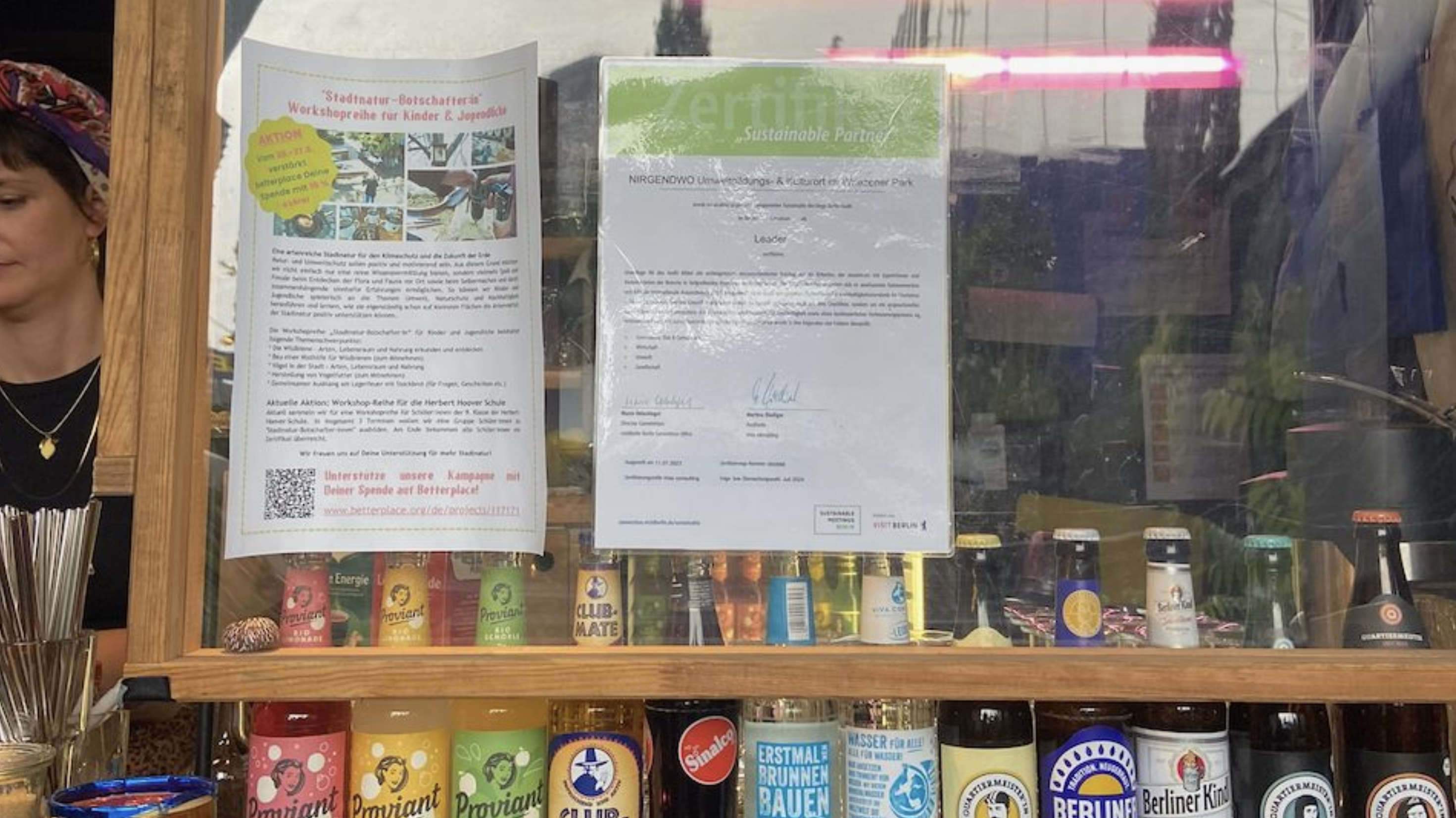
To make your event more sustainable, you can look out for the Certified Partner – sustainable Berlin seal, which checks sustainable quality standards for catering businesses in the event industry.
Food donations
If food is left over after an event, it can be donated if hygiene requirements are met, for example:
- Unopened or unprocessed food
- Fruit and vegetables without preparation
- Chilled or frozen products with an uninterrupted and verifiable cold chain
- Baked goods
- Freshly prepared food without guest contact (under strict hygiene rules)
Further links
IHK Berlin:
- Food law and product labelling (incl. food hygiene)
- Catering instruction
- LMHV training (Food Hygiene Regulation)
Berlin Service Portal:
- Apply for an infection protection instruction incl. certificate
- Apply for a temporary permit for a special occasion (Section 12 GastG)
- Register for proof of instruction – catering business
Berlin.de:
Legal bases: