
Waste Management & Sustainable Procurement
Overview
At events, large amounts of waste can build up in a short time. This includes, for example, disposable packaging and disposable tableware, bottle caps, cigarette butts, confetti, or decoration materials. Especially in public space, the existing public bins are often not sufficient or become full quickly.
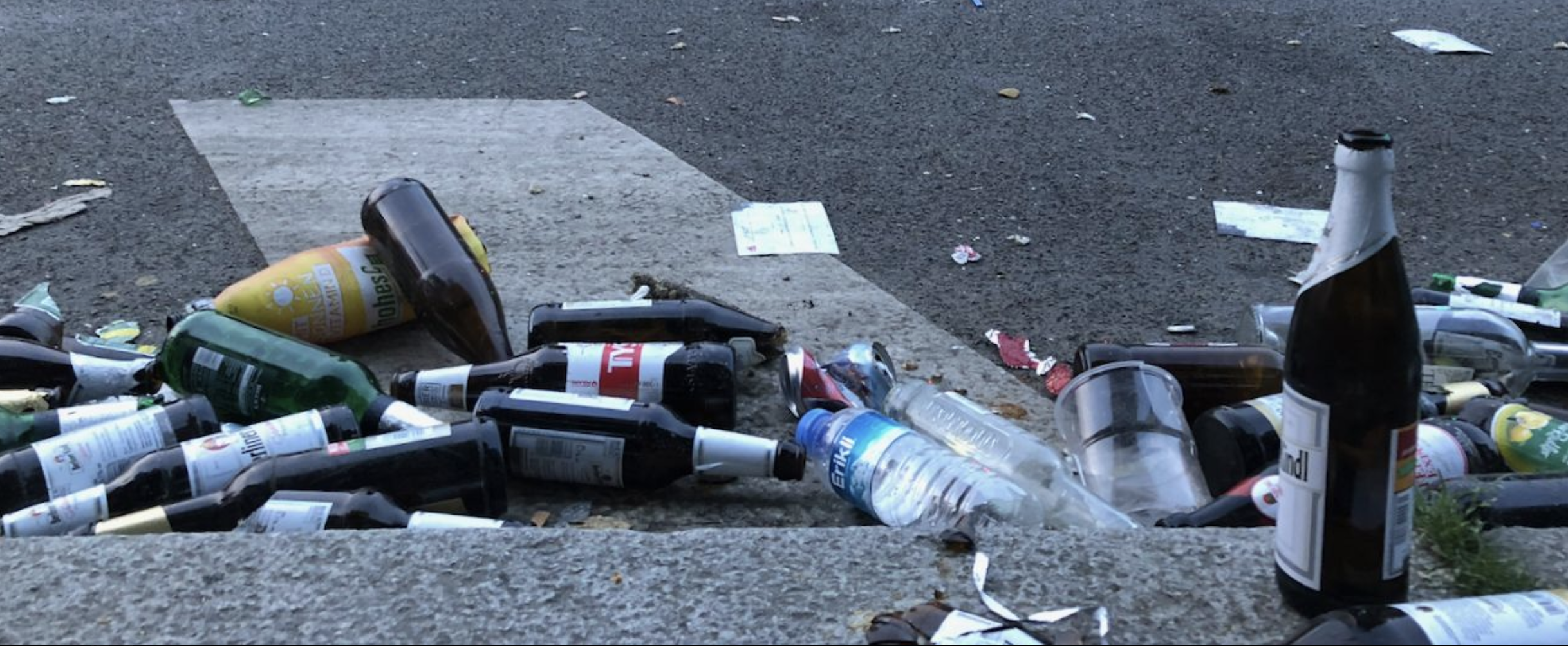
Leftover waste is not only a cleanliness issue. It harms animals and plants. Waste such as cigarette butts can contaminate soils and groundwater. Green and planted areas are often difficult to clean and require manual work.
Littered areas can also lead to conflicts with local residents or the responsible District Office (Bezirksamt). Typical problems are overflowing bins and waste placed next to the bins. In addition, waste on green surfaces and extra cleaning work after the event are common issues.
Effective waste management helps you avoid these problems. It does not start only on the event site, but already during preparation – by creating a waste concept. A lot of waste results from decisions regarding materials, packaging, and equipment. Conscious sustainable procurement reduces waste volumes and simplifies workflows.
Steps of Waste Management
What does waste management mean?
Waste management describes how waste is handled during an event. It includes measures to avoid unnecessary waste during setup, operation, and dismantling, to separate waste, and to organise collection, emptying, and disposal.
Decisions about materials, reusable systems, or re-use are made before the event—they are part of sustainable procurement.
Waste management is guided by the principles of the circular economy. The aim is to avoid waste, keep materials in use as long as possible, and return recyclable materials into suitable material cycles. A key reference is the waste hierarchy in the Circular Economy Act (Section 6) (Kreislaufwirtschaftsgesetz – KrWG):
Prevention → Re-use → Recycling → Recovery → Disposal
Effective waste management consists of several interlocking steps:
- Early planning of waste management
- Preventing waste during event operation
- Correct separation and disposal of waste
- Organising waste management as a system
- Awareness for everyone involved
Early planning
At events, waste is generated in different places —for example at food and sales stands, in the stage and backstage area, and at entrances and exits.
For planning, clarify early:
- Where waste is generated
- Which types of waste will occur
- How much waste is likely to occur
The following questions help:
- How many participants are expected?
- How long does the event last?
- Will there be catering or beverage service?
- Which materials and packaging will be used?
Based on this, you can:
- Define the number and locations of waste bins
- Plan workflows for emptying and transport
- Define responsibilities
Note: The points above form the basis for the waste concept, explained further below.
Preventing waste
Waste prevention is the most effective step. Waste that does not occur does not need to be collected or disposed of. Many waste-prevention measures are decided during preparation. Typical starting points are catering, packaging, equipment, and the materials used.
Suitable measures include:
- Avoiding confetti, balloons, and other scatter items
- Reducing flyers and printed promotional materials
- Targeted distribution of napkins, cutlery, or disposable cups/tableware
- Avoiding extra packaging at serving points
- Using reusables instead of disposables (see the Foods & Beverage (Catering) guide)
In practice, unnecessary waste often occurs where materials are handed out automatically. Check where napkins, cutlery, or other materials can be provided only when needed.
Waste separation
Even with good planning, some waste will be generated. For recycling to work, waste must be collected as cleanly separated as possible and disposed of correctly.
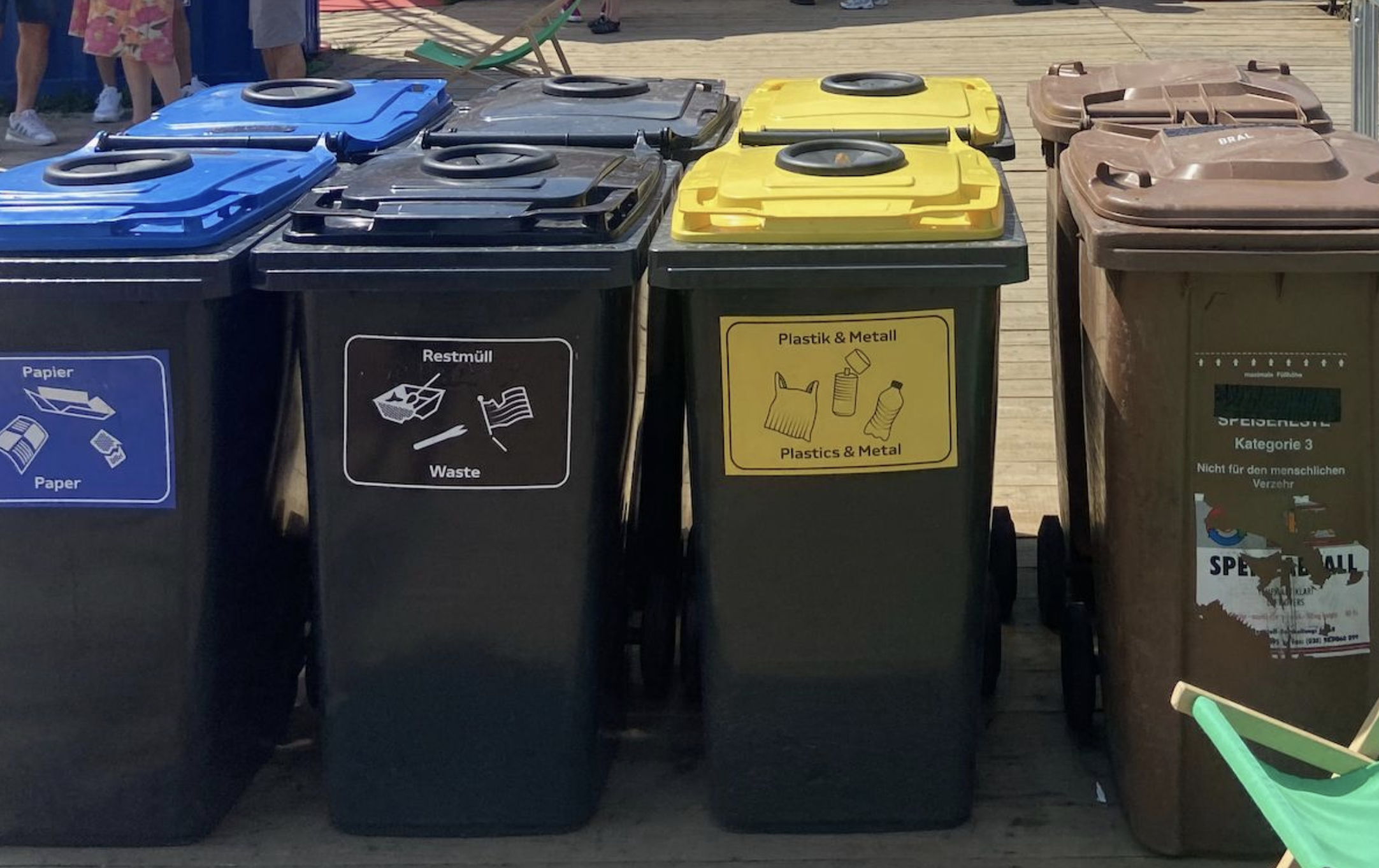
Waste stations can help enforce waste separation. They should be marked consistently using the same colours or symbols so the system remains easy to understand.
For events in public space, the following applies:
- Separation systems should be clearly labelled and be easy to understand.
- Waste bins must be highly visible and easy to access.
- Waste bins must be emptied and cleaned regularly.
- Consistent separation systems make use easier and reduce incorrect disposal.
Typical waste types are:
- Residual waste
- Paper and cardboard
- Lightweight packaging (recyclables)
- Food waste (organic waste, if relevant)
- Glass
Fats and oils generated during food preparation must be collected separately and disposed of properly. They must not be disposed of via drains or the sewage system. Clarify in advance how collection and disposal will be organised—for example with suitable containers and a specialised disposal company.
Note: In backstage and work areas, additional requirements apply, especially from the Commercial Waste Ordinance (Gewerbeabfallverordnung). Further guidance can be found in the Foods & Beverage (Catering) guide.
Organising waste management as a system
Effective waste management only works with clear responsibilities and coordinated workflows. Plan waste management as a coherent system.
Define before the event:
- Who is responsible for waste management
- Who checks and empties the bins
- How transport and disposal are organised
Waste management includes:
- A waste concept as a planning basis
- Clearly named responsibilities (e.g. a waste management or Green Team)
- Agreements with the disposal company
- Separate rules for public and work areas
The waste concept
A waste concept describes how waste handling is organised for an event. It serves as a planning basis and is often used as proof in approval or coordination procedures. The scope and level of detail can vary depending on the type, size, and location of the event.
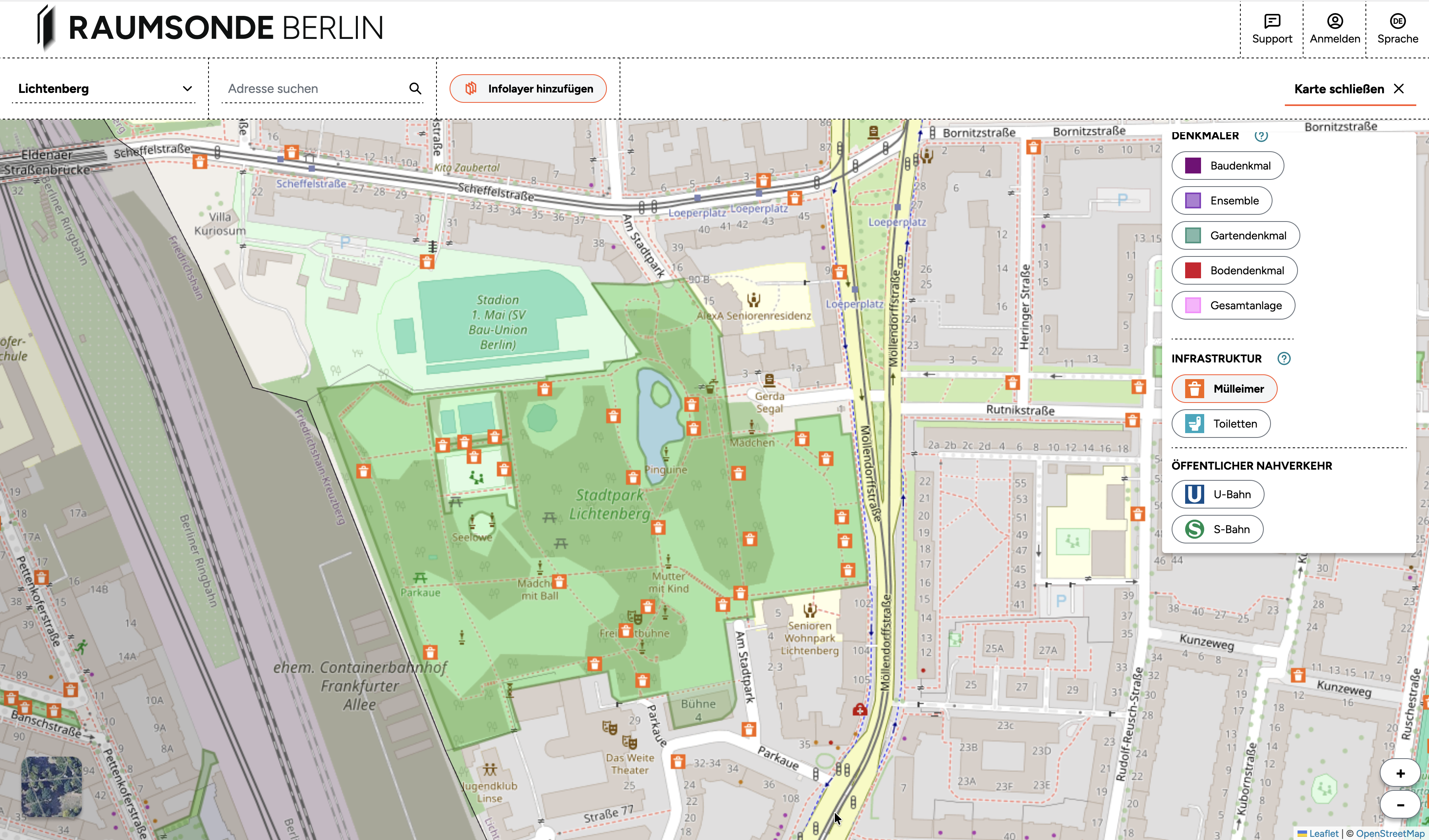
On the Space Map of Raumsonde, you can use the info layers to see where the nearest public bins are around your planned event site. This is especially important for smaller open-air events.
A clear waste concept makes coordination with all involved parties easier and can reduce follow-up questions in the approval procedure / permit process.
Contents of a waste concept
As a rule, a waste concept includes the following:
- Information about the event (location, period, duration, expected number of participants)
- Areas where waste may occur
- Expected waste types and a rough estimate of quantities
- Measures to avoid unnecessary waste during setup, operation, and dismantling
- Number, type, and locations of waste bins
- Rules for separate collection of waste
- Responsibilities and workflows for checks, emptying, transport, and cleaning
- Separate consideration of public and work areas
- Information and briefing of involved persons
- Coordination with the responsible disposal company
- Rules for cleaning and checking the area after the event ends
How detailed the waste concept needs to be depends on the event. For smaller events, short information is often sufficient. The best approach is to clarify early with the responsible office which contents are required.
Templates and guidance
To create a waste concept, you can use the Guide to low-waste major events by the Senate administration for Environment, Mobility, Consumer Protection and Climate Protection (Senatsverwaltung für Umwelt, Mobilität, Verbraucher- und Klimaschutz) and BSR.
It also includes:
The guide also contains many practical notes for creating a waste concept. It primarily targets major events but can also be helpful for smaller events.
Note: A list of responsible contacts in the Public Order Offices (Ordnungsamt) can be found in the contact list for all districts.
Implementation and on-site supervision
A waste concept only works if you implement it on site. Waste management therefore means not only planning and organisation, but also thoughtful use and design of the event site.
Waste stations
Waste stations should be placed where waste is generated. They must be clearly visible, consistently marked, and accessible. For events in the dark, sufficient lighting is required. If waste stations are hard to see or bins overflow, waste is often left next to them. Regular checks and timely emptying are therefore important.
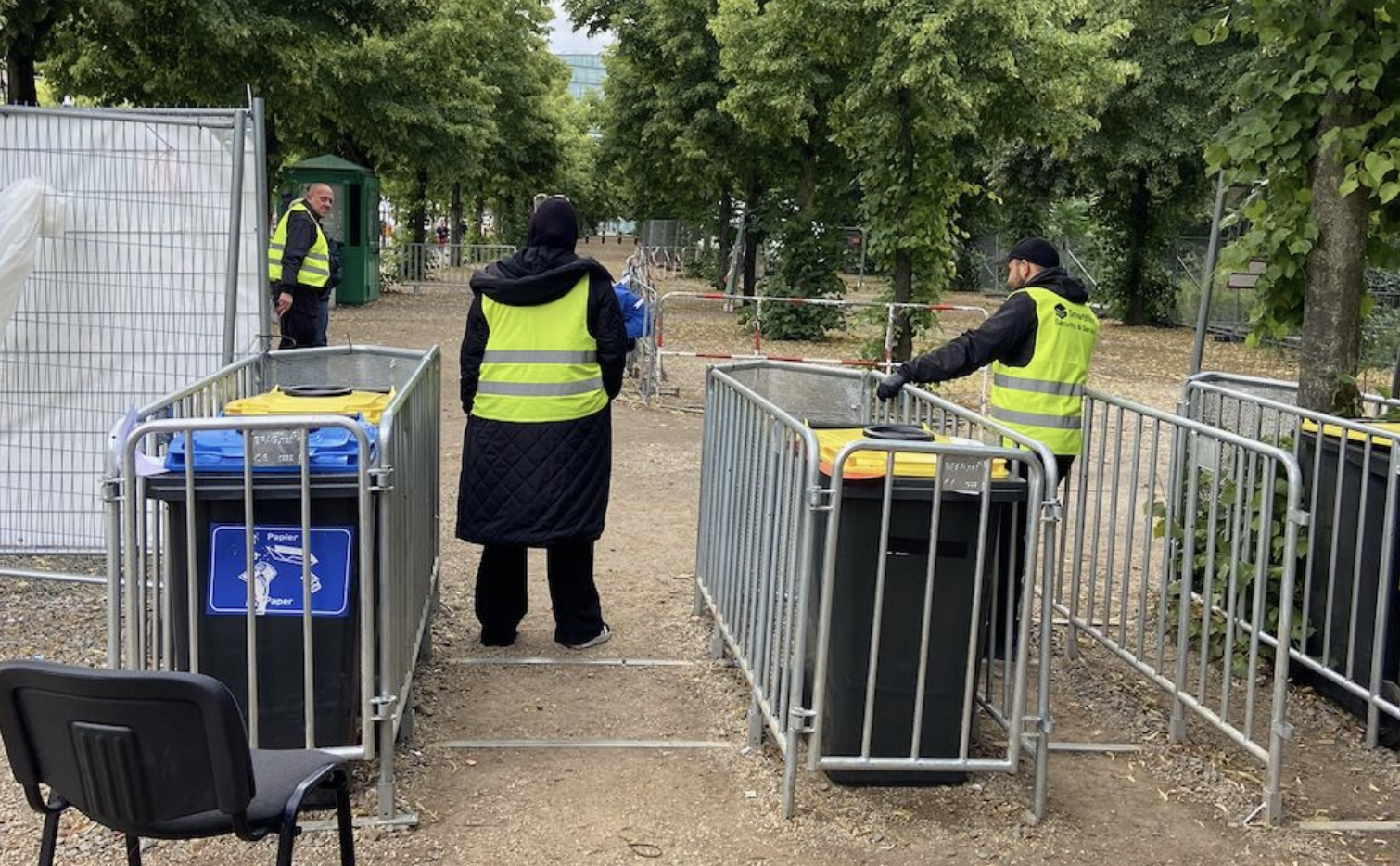
Waste stations should be placed where waste is generated and where large amounts are expected. Entrances and exits are often affected by heavy littering. Plan enough waste stations at these points.
Supervision and emptying
To keep waste stations functional, regular supervision is necessary. Clarify in advance:
- Who checks the bins
- When and how often they are emptied
- How transport is organised
These tasks can be part of a waste management or Green Team.
Waste management team
A waste management team (“Green Team”) supports implementation of the waste concept during the event. It ensures that waste stations are supervised and is available on site.
Typical tasks include:
- Checking and emptying bins
- Supporting correct waste separation
- Reporting problems or bottlenecks
Choose people who are present and can communicate well with visitors. Visible identification—for example with vests or shirts—helps participants recognise and approach the team quickly. The size of the team depends on expected attendance, the site size, and the type of event.
Awareness
It is not enough to provide bins or implement individual measures. It is also important that everyone involved knows and applies the waste concept. This includes staff, visitors, and service providers such as security, food stands, and sanitation staff.
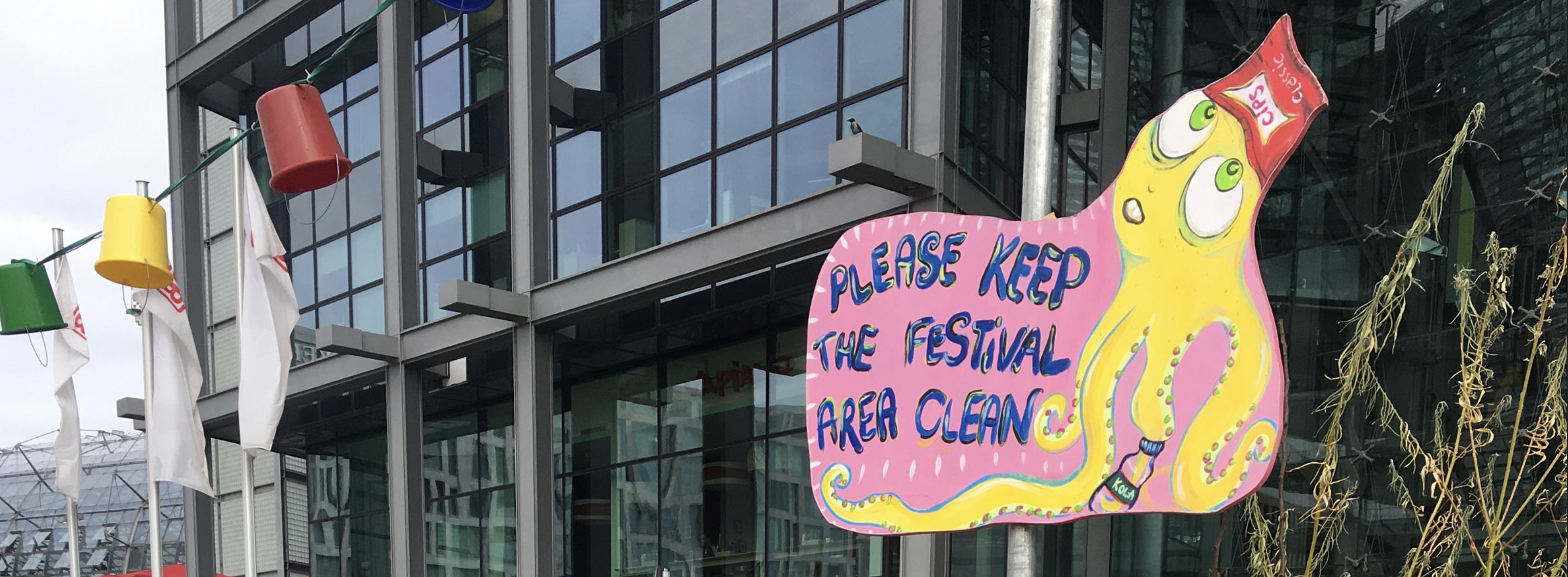
Before the event, clarify and consider the following:
- Information on waste prevention and separation
- Responsibilities and contact persons
- Notes on waste stations and return systems
- Including information and compliance with the waste concept in contracts
- Clear communication in briefings
On the event site, the following aspects should be consistent:
- Clearly labelled waste stations
- Consistent symbols and colours
- Short, easy-to-understand hints
Sustainable procurement
Sustainable procurement is a central lever for preventing waste. A lot of waste is created already during event preparation. Your decisions about materials, packaging, and reusable, rental/loan, and return systems determine how much waste occurs later and how complex operations will be.
This includes, for example:
- Tableware and cups
- Furniture and technical equipment
- Signage and wayfinding
- Decoration
- Consumables
Where possible, use reusables, rental/loan, and re-use. If new items must be purchased, it makes sense to choose durable products and recognised sustainability labels. They provide orientation on environmental standards, material quality, and production, and support resource-saving use.
Principles of sustainable procurement
When procuring for events in public space, ask yourself:
- Is the material or product necessary?
- Can it be re-used or borrowed?
- Will avoidable waste be created?
- Is the material durable and robust?
- Can products be repaired?
- If buying new: are there more sustainable alternatives, e.g. products with recognised environmental labels?
These principles align with the circular economy. The goal is to keep resources in use as long as possible and to avoid waste or return it to suitable material cycles.
Materials and equipment
Waste can also result from procurement outside catering. You can significantly reduce waste volumes by choosing:
- Rental systems for furniture and technical equipment
- Modular, reusable equipment
- Durable signage
- Decoration that can be used multiple times
Short-lived materials and one-off custom productions increase the effort for dismantling and disposal. If possible, avoid them.
Catering and beverage service
Sustainable procurement is especially important for catering. Among other topics, the following are covered in the Foods & Beverage (Catering) guide:
- Requirements for catering offers
- Reusable and deposit systems
- Packaging
- Food waste
- Commercial waste separation
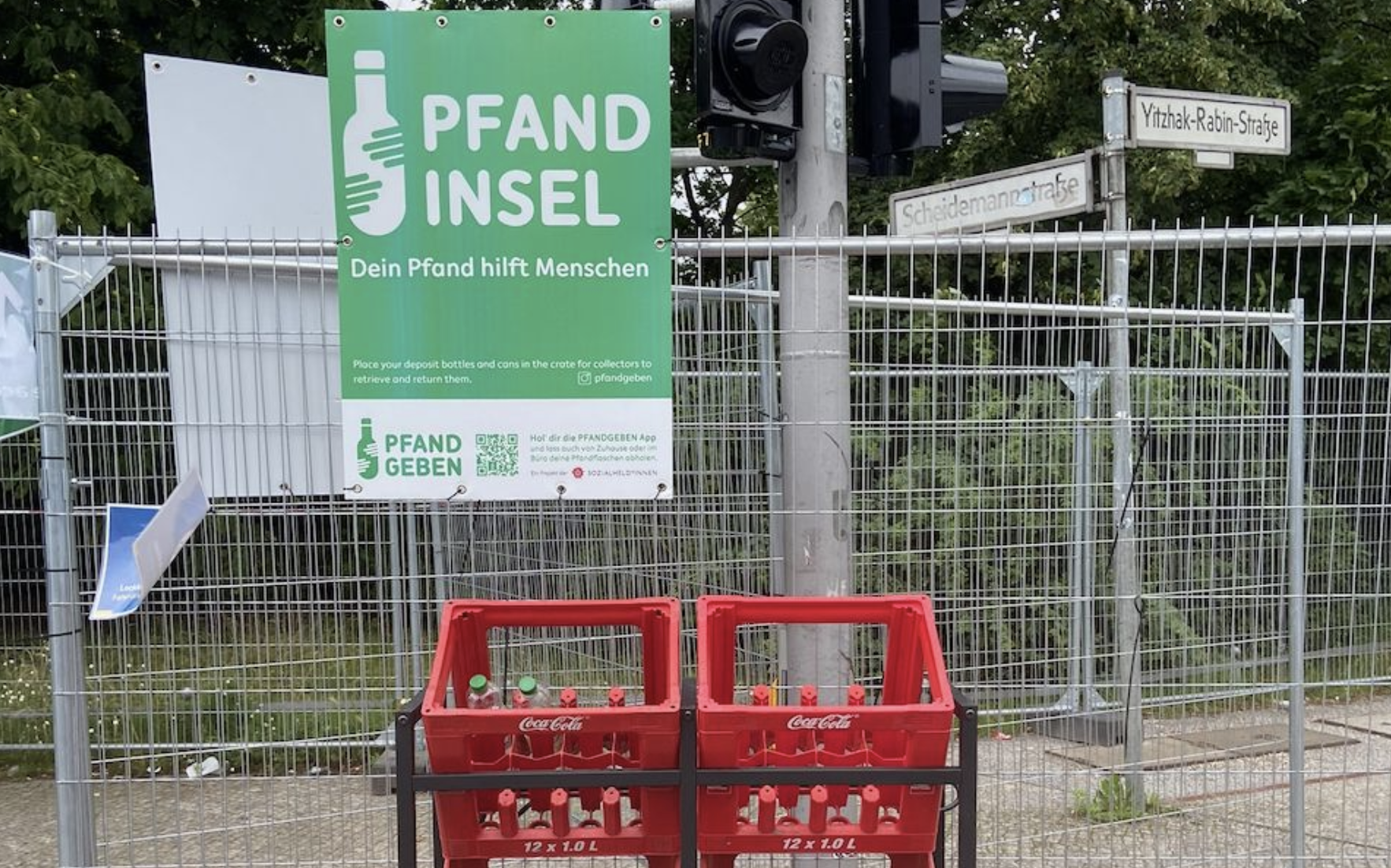
Avoidable waste includes disposable beverage containers. If you hand out deposit bottles at your event and collect them again via deposit stations, you can not only save money but also effectively reduce packaging waste. More information on deposit stations can be found on the website of "Sozialheld*innen".
Follow-up and checks
Waste management does not end when the event ends. If possible, plan dismantling, cleaning, and follow-up early as well.
Important steps include:
- Fully emptying all waste bins
- Checking the area for leftover waste
- Proper disposal via the contracted companies
If you run similar events regularly, it is worth documenting experiences in a way that is accessible:
- Which measures worked well?
- Where were there bottlenecks?
- What can you improve next time?
Note: After the event, briefly note where waste occurred and where additional bins would have been useful. This feedback helps you plan future events better and simplify workflows further.
Further hints and materials
For deeper dives into individual topics, guides, checklists, and templates are available. Depending on event size and district, they may be relevant to different degrees.
- Action guide “Climate-neutral events in Berlin” (GRÜNE LIGA Berlin), from p. 44
- Guide for the sustainable organisation of events (BMU & UBA)
- Green Club Guide (Clutopia)
- Kiez Tool Box: Zero Waste & Cleaning
Legal basis